
The State of Tattoo Culture in Atlanta: A 2026 Local Industry Report
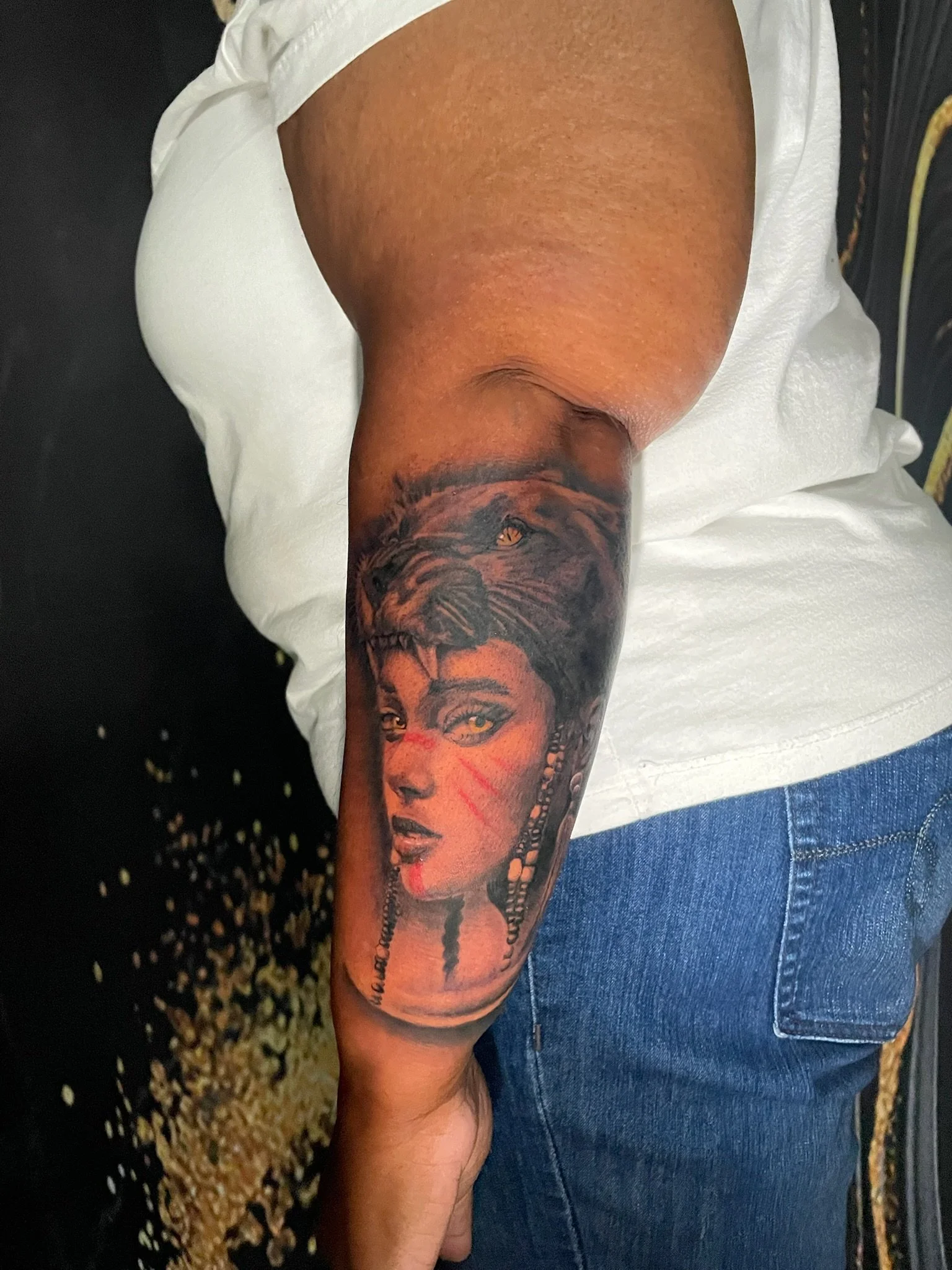
Atlanta's tattoo culture is no longer something that exists quietly on the edges of the city's creative scene.
In 2026, tattoos are increasingly connected to fashion, music, personal identity, visual art, travel, and Atlanta's broader creative economy. Visitors are even incorporating tattoos into their Atlanta experiences, with Discover Atlanta recently highlighting tattooing as a meaningful travel souvenir and noting the city's range of styles, from fine line to traditional work.
At the same time, the local market is becoming more sophisticated.
Clients have more artists to choose from. They can research portfolios before booking, compare styles online, read reviews, study healed work, and communicate directly with artists through social platforms.
That has changed what people expect from a tattoo shop in Atlanta.
This 2026 local industry report examines the major developments shaping Atlanta's tattoo culture, from artistic trends and custom work to professionalism, regulation, local identity, and changing client expectations.
Research note: This is a qualitative local industry report based on current Atlanta studio activity, local coverage, publicly available regulatory information, and observed 2026 industry trends. It is not a statistical census of every tattoo business in the Atlanta metropolitan area.
Atlanta's Tattoo Scene Has Become More Diverse
There isn't one visual style that defines Atlanta tattoo culture.
The city's tattoo scene includes artists working across:
Black and grey realism
Fine line
Traditional
Neo-traditional
Colour
Blackwork
Botanical designs
Lettering
Portraiture
Cover-ups
Ornamental tattoos
Custom illustrative work
Current local coverage reflects that diversity. Atlanta's studios are promoting everything from fine-line and realism to flash, custom work, and larger collector projects.
That variety is one of the industry's biggest strengths.
A first-time client can approach tattooing very differently from an experienced collector, yet both can find artists whose portfolios match their goals.
Trend No. 1: Custom Tattooing Is Becoming More Important
One of the clearest developments in the 2026 Atlanta tattoo market is the emphasis on personalisation.
Clients aren't necessarily asking:
"What tattoo should I get?"
They're increasingly asking:
"How can we turn this idea into something that feels like mine?"
That distinction matters.
A custom tattoo can incorporate a client's:
Personal history
Family
Culture
Music interests
Travel experiences
Important dates
Symbols
Photography
Existing tattoos
Recent reporting on the Atlanta and Athens market similarly describes growing interest in custom work, consultations, cover-ups, blackwork, fine line, and personalised studio experiences.
Trend No. 2: Fine Line Continues to Gain Attention
Fine-line tattooing has become one of the most visible aesthetics in Atlanta's current tattoo conversation.
Local studios are actively featuring delicate linework, botanical designs, small-scale artwork, and detailed minimalist pieces in their 2026 content.
Fine line appeals to clients who want something visually subtle.
But the popularity of the style also creates a challenge.
A tattoo that looks delicate on Instagram still requires appropriate sizing, placement, technique, and aftercare.
For clients, that means choosing an artist based on demonstrated skill rather than simply searching for the thinnest possible line.
Trend No. 3: Realism Remains a Major Part of Atlanta's Identity
Fine line may be receiving considerable attention, but realism remains firmly established.
Portraits, animals, memorial tattoos, religious imagery, and black and grey compositions continue to attract clients looking for highly detailed work.
This is particularly relevant to tattoo artists in Atlanta who specialise in technically demanding pieces.
Realism requires more than copying a photograph.
The artist has to interpret light, contrast, depth, anatomy, and skin as a three-dimensional canvas.
That is why portfolio specialisation matters so much when clients compare artists.
Trend No. 4: The Client Is Doing More Research Before Booking
The modern tattoo customer is increasingly research-driven.
Before making an appointment, someone might:
Search for tattoo artists in Atlanta.
Compare Instagram portfolios.
Read Google reviews.
Look at previous work.
Search for specific tattoo styles.
Investigate studio hygiene.
Ask about pricing.
Schedule a consultation.
That behaviour changes the relationship between artist and client.
The artist is no longer being evaluated only when the customer walks into the studio.
The decision may have already been influenced by weeks of online research.
For studios, this makes a strong digital presence increasingly important.
Trend No. 5: Healed Work Is Becoming More Valuable
Fresh tattoos photograph extremely well.
They're clean, saturated, and newly finished.
But experienced clients know that the fresh photograph isn't the complete story.
How does the tattoo look after healing?
How have the lines settled?
How has the shading changed?
Does the design remain readable?
Industry commentary in 2026 has identified healed-work photography as an increasingly important trust signal for research-oriented clients.
For someone evaluating an Atlanta tattoo artist, healed examples can provide more useful information than a gallery consisting entirely of freshly completed tattoos.
Trend No. 6: Professional Standards Matter More Than Ever
Tattoo culture has become more mainstream, but tattooing remains a procedure that requires serious attention to hygiene and safety.
Georgia has formalised statewide body-art requirements.
The Georgia Department of Public Health adopted Chapter 511-3-8, establishing rules covering body-art studios and artists, with certification and permitting requirements.
The state also provides information on body artist certification and maintains a list of certified body artists.
That means clients have another reason to look beyond aesthetics when choosing a professional tattoo studio in Atlanta.
A beautiful portfolio matters.
So do professional standards.
What Regulation Means for Atlanta Clients
Regulation isn't necessarily the most exciting part of tattoo culture, but it is important.
Georgia's body-art rulesestablish standards for studios and artists, and the Georgia Department of Public Health explains that local health authorities also play a role in implementation and enforcement.
For clients, this reinforces several basic principles:
Ask reasonable questions about studio standards.
Look for appropriate certifications.
Pay attention to cleanliness.
Choose professional artists.
Don't assume an attractive studio is automatically a safe one.
The goal isn't to make clients suspicious of every tattoo shop.
It's to make informed decision-making part of the tattoo experience.
Trend No. 7: Atlanta's Neighbourhoods Influence Tattoo Culture
Atlanta is not culturally uniform.
The energy around areas such as East Atlanta Village, Little Five Points, Midtown, West Midtown, Downtown, and surrounding communities contributes to a diverse creative landscape.
Tattooing naturally reflects that.
The artwork people choose can connect with:
Music
Street culture
Southern identity
Family history
Local landmarks
Fashion
Contemporary art
Personal experiences
This makes Atlanta tattoo culture more difficult to define with one aesthetic.
Its identity comes from the combination.
Trend No. 8: Tattoos Are Becoming Experiences, Not Just Appointments
Another interesting shift is the growing importance of the overall experience.
A client may now evaluate a studio based on:
Communication
Atmosphere
Consultation
Artist personality
Booking process
Studio design
Aftercare support
Community involvement
Local studios are also creating events and experiences around tattoo culture. For example, Atlanta studios have promoted artist gatherings, collector events, flash events, and broader creative activations during 2026.
This suggests that tattoo studios increasingly function as creative spaces rather than simply places where tattoos are applied.
Trend No. 9: Tattoo Tourism Is Becoming Part of Atlanta's Culture
Atlanta's influence extends beyond people who live here.
Visitors are increasingly considering tattoos as souvenirs connected to their travel experience.
Discover Atlanta specifically highlighted tattooing as a meaningful way for visitors to commemorate birthdays, friendships, milestones, and their experience of the city.
That creates an interesting local opportunity.
An Atlanta tattoo can become more than body art.
It can become a permanent reminder of a particular place and moment.
Trend No. 10: Clients Are Thinking More About Longevity
The modern client is asking better questions.
Not only:
"Will this look good today?"
But:
"How will this tattoo age?"
That affects decisions about:
Size
Line weight
Detail
Contrast
Placement
Skin exposure
Design complexity
This is particularly important for minimalist and highly detailed tattoos.
The best tattoo isn't necessarily the one that looks most impressive on a phone screen.
It's the one that makes sense on actual skin.
The Atlanta Tattoo Industry Is Becoming More Competitive
More choice is good for consumers.
But it also raises the standard for artists and studios.
A studio can't rely solely on having a physical location.
Clients can compare dozens of artists from their phones.
They can find specialised artists outside their immediate neighbourhood.
They can read reviews before contacting a studio.
They can research an artist's style before spending a dollar.
That means reputation and expertise are increasingly visible.
What This Means for Someone Searching "Tattoo Artist Atlanta"
If you're a client, the growing competition gives you more options.
But more options require better evaluation.
Don't simply choose the first tattoo shop near you.
Instead, consider:
Portfolio
Does the artist actually specialise in your desired style?
Experience
Have they completed projects similar to yours?
Reviews
Do previous clients consistently mention professionalism and communication?
Hygiene
Does the studio demonstrate appropriate safety practices?
Consultation
Are they willing to discuss your concept and explain their recommendations?
Healed Work
Can you see how their tattoos look after recovery?
These questions can help separate an attractive online presence from genuine professional expertise.
What Could Define Atlanta Tattoo Culture Next?
If current trends continue, Atlanta's tattoo industry may become even more specialised.
We could see stronger growth in:
Artist-specific niches
Private studios
Custom consultation services
Healed-work portfolios
Tattoo tourism
Fine-line work
Realism
Large custom projects
Crossovers between tattoos, jewellery, fashion, and other creative industries
The broader industry is also moving toward stronger direct relationships between artists and clients, with independent studios becoming an increasingly important part of the market.
Atlanta is well positioned for that evolution because the city's creative identity already spans music, fashion, visual art, entertainment, and entrepreneurship.
FAQs About Atlanta Tattoo Culture in 2026
What tattoo styles are popular in Atlanta in 2026?
Fine line, realism, black and grey, custom illustrative work, botanical designs, traditional styles, cover-ups, and personalised tattoos are all visible in Atlanta's current tattoo scene.
Is Atlanta a good city for getting a tattoo?
Atlanta has a broad and diverse tattoo community, giving clients access to artists working across many different styles and approaches. Local tourism coverage also recognises the city's tattoo scene as part of its creative culture.
How do I choose a tattoo artist in Atlanta?
Start with the artist's portfolio and make sure they regularly produce the style you want. Then consider reviews, healed work, studio standards, communication, and consultation options.
Are tattoo studios in Georgia regulated?
Yes. Georgia has statewide body-art rules administered through the Department of Public Health, including requirements involving body-art studios and artist certification.
Are custom tattoos becoming more popular in Atlanta?
Current local coverage indicates strong interest in custom work and personalised consultations, particularly among clients seeking artwork that reflects their individual identity rather than choosing generic designs.
Final Assessment: Where Atlanta Tattoo Culture Stands in 2026
Atlanta's tattoo culture is entering a more mature phase.
The industry is no longer defined simply by whether tattoos are popular.
They clearly are.
The more interesting question is how people are getting tattooed.
Clients are researching artists more carefully. Custom work is becoming increasingly important. Fine line and realism continue to attract attention. Healed results are becoming valuable evidence of quality. Professional standards matter more. And tattoo studios are increasingly becoming part of Atlanta's broader creative and cultural ecosystem.
For local clients, that is a positive development.
There are more choices, more information, and more opportunities to find an artist whose skills genuinely match a particular vision.
For Atlanta's tattoo artists and studios, however, the message is equally clear:
The market is becoming more competitive, and quality has to be demonstrated, not simply claimed.
That may ultimately be the defining characteristic of Atlanta tattoo culture in 2026.