
How Tattoo Technology Is Changing in 2026: Machines, Pigments, and the Artist's Role
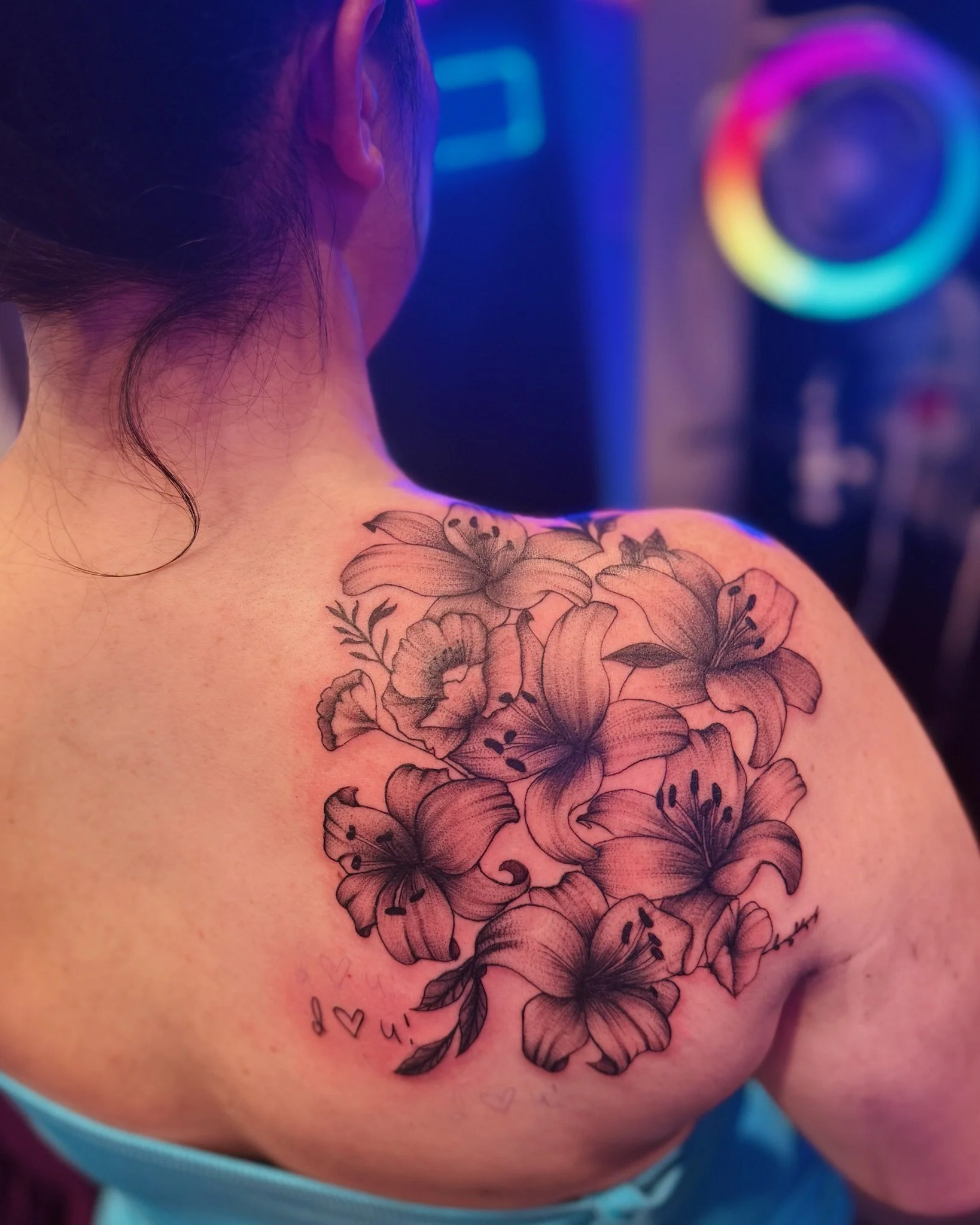
Tattoo technology is changing in several directions at once.
Machine manufacturers continue to develop wireless equipment, adjustable settings, lighter designs, and more flexible configurations. At the same time, researchers are examining tattoo pigments, chemical composition, contamination, pigment particles, and how tattoo ink behaves after it enters the skin.
Digital technology is also changing how some tattoos are designed and planned.
But there is an important distinction that often gets lost in discussions about "new tattoo technology."
New does not automatically mean better, safer, or proven.
Some technologies are already established in professional tattooing. Others are relatively recent equipment developments. Some pigment technologies remain experimental or are still being studied in laboratories and small clinical investigations.
For anyone researching tattoo machine trends in 2026, the bigger question is not simply what is new. It is what has actually been established, what remains under investigation, and what claims still require stronger evidence.
Tattoo Machine Trends in 2026
The tattoo machine has changed considerably over the years.
Modern machines are available in rotary, pen-style, wireless, adjustable, and hybrid configurations. Artists can select equipment based on their technique, preferred working style, tattoo size, and the type of work being performed.
Some modern tattoo machines offer features such as:
Adjustable needle depth
Adjustable stroke length
Wireless battery operation
Ergonomic pen-style construction
Interchangeable grips
Cartridge compatibility
Adjustable voltage or power settings
Different motor configurations
These developments can give artists greater control over their workflow.
However, more features do not necessarily mean better results.
A machine with numerous settings still requires an artist who understands how those settings affect needle movement, skin interaction, pressure, hand speed, and ink application.
The equipment is a tool. The artist remains responsible for how that tool is used.
Are Newer Tattoo Machines Better?
Not necessarily.
A newer tattoo machine may provide improvements in weight, battery life, ergonomics, adjustability, or motor performance. Those improvements can be useful, particularly for artists who spend many hours tattooing.
But a newer machine does not automatically produce a better tattoo.
The quality of a tattoo also depends on:
Artist experience
Hand control
Needle selection
Machine settings
Skin assessment
Design planning
Tattoo placement
Technique
Ink application
Healing and aftercare
An experienced tattoo artist may also prefer a machine that is not the newest model because they already understand how it behaves during different tattooing techniques.
This is why equipment specifications should be viewed in context rather than treated as a measurement of artistic ability.
Wireless Tattoo Machines Are Becoming More Common
Wireless tattoo machines are one of the most noticeable equipment developments in recent years.
Instead of relying on a cable connecting the machine to a separate power supply, wireless machines use an integrated or attached battery.
The main attraction is convenience.
Wireless equipment can provide:
Greater freedom of movement
Fewer cables around the workstation
Easier repositioning
More flexible working positions
Less cable interference during a tattoo session
However, wireless equipment also introduces additional considerations.
Battery-powered machines need to be charged and maintained properly. Artists need to understand battery capacity, operating time, charging procedures, and what happens if the battery runs low during a session.
Wireless equipment also does not eliminate the need for infection-control procedures.
A cordless machine is still equipment that comes into a controlled tattoo environment. Appropriate barriers, cleaning procedures, cartridge handling, and contamination prevention remain important.
The absence of a cable should not be confused with an improvement in hygiene.
Adjustable Tattoo Machines and Needle Depth
Another important development in modern tattoo equipment is adjustability.
Some machines allow artists to change needle depth or other operating characteristics. This can give artists more control over how the machine behaves during different tattooing techniques.
However, adjustment requires knowledge.
The ideal configuration can vary depending on the tattoo, needle grouping, skin characteristics, technique, and artist.
Too much pressure, inappropriate settings, or unsuitable technique can contribute to unnecessary skin trauma and inconsistent results.
This is particularly important when discussing detailed tattoo styles.
Fine-line work requires careful control of line weight and needle movement. Realism can involve controlled transitions between different shades and levels of saturation. Black-and-grey work requires attention to contrast, gradients, and tonal balance.
The machine can support these techniques, but it does not perform the artistic decisions itself.
Tattoo Ink Technology Is Also Changing
Machines are only one part of tattoo technology.
Tattoo pigment research has become increasingly important because tattoo ink is deliberately introduced into the skin and can remain there for many years.
Researchers are studying questions involving:
Pigment composition
Particle size
Chemical contaminants
Metal content
Pigment migration
Inflammatory responses
Allergic reactions
Long-term exposure
Manufacturing quality
Microbial contamination
The scientific discussion around tattoo ink is therefore much broader than simply asking whether a particular color looks vibrant.
A pigment can perform well visually while still requiring investigation into its chemical composition and biological effects.
This is one reason consumers should be cautious about treating marketing terms as scientific conclusions.
Are New Tattoo Inks Safer?
There is no universal answer.
A newer formulation may use a different pigment, manufacturing process, or ingredient combination. That does not automatically establish that it is safer than an older formulation.
Safety depends on multiple factors, including:
The ingredients used
Manufacturing controls
Contamination prevention
Testing methods
Product handling
Regulatory requirements
Available scientific evidence
Individual reactions
Terms such as "non-toxic," "organic," "vegan," or "hypoallergenic" should also be interpreted carefully.
A label may describe a particular characteristic of an ink without proving that the product is risk-free for every person.
Tattoo reactions can occur for different reasons, and scientific understanding of tattoo pigments continues to develop.
Tattoo Pigment Research Is Expanding
Researchers are increasingly interested in what happens to tattoo pigment after it is introduced into the skin.
Some pigment particles can remain in the skin for extended periods. Research has also investigated movement of pigment particles and their interaction with surrounding tissues.
Recent scientific work has examined the presence of metals and nanoparticles in tattoo inks, while other research has explored potential biological responses to tattoo pigment components.
These studies are important, but individual studies need to be interpreted within their limitations.
A laboratory finding does not automatically mean that every tattoo ink creates the same outcome in humans.
Likewise, finding a particular chemical or particle in an ink sample does not by itself establish the level of risk associated with every tattoo procedure.
Scientific evidence develops through repeated testing, larger studies, different research methods, and long-term observation.
Tattoo Ink Contamination Remains a Safety Concern
One area of tattoo safety that does not depend on futuristic technology is contamination.
Tattoo ink can become contaminated with microorganisms, and contamination can occur during manufacturing, packaging, storage, or handling.
This is why tattoo safety involves more than the artist's machine.
Important considerations include:
Manufacturing conditions
Ink storage
Container handling
Cross-contamination prevention
Single-use supplies
Workstation hygiene
Hand hygiene
Appropriate disposal procedures
The FDA has warned that tattoo and permanent makeup inks can become contaminated with microorganisms and has published guidance concerning microbial contamination of tattoo inks.
This is particularly relevant because an ink container can appear clean and remain sealed while still presenting a contamination concern.
Consumers can review the FDA's tattoo and permanent makeup safety information for additional information.
Emerging Tattoo Pigments: What Is Real and What Is Still Experimental?
Some of the most interesting developments in tattoo technology involve pigments designed to behave differently from conventional tattoo ink.
Researchers have investigated concepts including:
Photoresponsive pigments
Color-changing tattoo materials
Rewritable tattoo systems
Smart tattoo concepts
Advanced nanoparticle-based pigments
Specialized pigment delivery systems
These developments receive attention because they challenge the traditional idea of a tattoo as a permanent visual mark.
However, research should not be confused with routine commercial availability.
A technology can be demonstrated in a laboratory or small study without being ready for widespread tattooing.
Before an experimental pigment could become an established tattoo technology, researchers would need to consider issues such as:
Long-term skin compatibility
Stability within the body
Potential breakdown products
Allergic reactions
Inflammatory responses
Color stability
Removal procedures
Manufacturing consistency
Long-term human outcomes
Regulatory requirements
This distinction is particularly important when reading social media posts about "reversible tattoos" or "smart ink."
A research development can be scientifically interesting without being ready for everyday use.
Could Tattoos Become Reversible?
Research into color-changing and rewritable tattoo systems has raised questions about whether tattoo permanence could eventually be approached differently.
Some experimental systems are designed to change appearance in response to particular environmental conditions, such as specific wavelengths of light.
A 2026 research publication examined a photochromic tattoo pigment system designed to produce reversible visual changes. Research of this type is interesting because it explores a fundamentally different approach to tattoo permanence.
However, experimental results should not be interpreted as proof that fully reversible tattoos are now an established consumer technology.
Several questions remain important:
How stable is the material over many years?
How does the skin respond to repeated changes?
What happens to the pigment over time?
Can the material be removed completely?
What happens when the technology is exposed to normal sunlight?
How does the material behave after long-term implantation?
These questions require further evidence.
Tattoo Safety Regulations Are Also Evolving
Technology and regulation do not always develop at the same speed.
Tattoo ink regulation differs between countries and regions. In the United States, tattoo inks fall under federal oversight as cosmetic products, while the practice of tattooing is generally regulated at the state and local level.
Other regions use different regulatory systems.
The European Union, for example, has introduced restrictions on certain substances used in tattoo inks and permanent makeup through its REACH framework.
This means that a statement about tattoo ink being "approved" or "compliant" needs context.
Consumers should consider:
Which country regulates the product?
Which regulations apply to the tattoo procedure?
What ingredients are present?
What testing has been performed?
What does the regulatory status actually cover?
Is the claim about the ink, the machine, or the tattooing procedure?
Regulatory language can sound reassuring while still leaving important questions unanswered.
For current U.S. information, the FDA's Think Before You Ink safety guidance provides information about tattoo risks, ink contamination, allergic reactions, and other safety considerations.
Can New Tattoo Technology Make Tattoos Safer?
Technology may help improve certain aspects of tattooing, but no machine or pigment can guarantee a completely risk-free tattoo.
Safety involves multiple stages.
The equipment must be appropriate and maintained correctly.
The artist needs appropriate training and technical knowledge.
The work environment needs appropriate hygiene and contamination controls.
The ink needs to be handled correctly.
The client also needs appropriate aftercare.
The healing process depends on many variables, including:
Tattoo size
Tattoo location
Technique
Skin characteristics
Aftercare
Friction
Sun exposure
Individual sensitivity
Possible infection or inflammatory reaction
Technology can support good practices, but it cannot replace them.
Digital Tattoo Technology Is Changing Design Planning
Tattoo technology is not limited to machines and pigments.
Digital tools are increasingly used during the design and planning process.
Artists and clients may use digital sketches, image editing, body-placement previews, and other visual tools to explore a concept before tattooing begins.
These tools can help with:
Placement
Proportion
Scale
Composition
Visual balance
Design revisions
Combining multiple reference images
However, a digital mockup is not a perfect representation of the final tattoo.
The human body is three-dimensional. Skin moves, stretches, folds, ages, and responds differently across different locations.
A design that looks balanced on a flat screen may require changes when adapted to an actual body.
Digital tools are therefore best viewed as planning aids rather than guarantees.
AI and Tattoo Design: Useful Tool or Creative Shortcut?
Artificial intelligence is also entering the tattoo design conversation.
AI image-generation tools can produce visual concepts quickly, allowing users to explore different compositions, themes, and artistic directions.
But AI-generated images can contain problems that are difficult to recognize at first glance.
These may include:
Anatomical inconsistencies
Unrealistic details
Excessively fine elements
Designs that do not translate well to skin
Difficult-to-reproduce textures
Copyright or originality concerns
Inconsistent details between different parts of an image
A tattoo artist still needs to interpret the concept and determine how it can realistically be converted into a tattoo.
The useful role of digital technology is often helping communicate an idea rather than replacing the design process entirely.
Why the Artist's Role Still Matters
As tattoo equipment becomes more advanced, the artist's role remains central.
A tattoo artist needs to make decisions about:
Design
Placement
Scale
Needle selection
Machine settings
Pressure
Hand speed
Line control
Shading
Saturation
Skin response
Healing considerations
These decisions require practical knowledge.
An expensive machine cannot determine the correct needle configuration for every tattoo.
A pigment cannot determine where the design should be placed.
A digital tool cannot determine how a tattoo will age on an individual's skin.
The artist connects all of these elements.
This is why evaluating tattoo technology should not focus exclusively on equipment specifications. The artist's experience with the equipment and ability to adapt technique are equally important.
Established Tattoo Technology in 2026
Some developments are already established parts of modern tattooing.
Rotary Tattoo Machines
Rotary machines are widely used professional tattoo equipment. They are available in different configurations and can support a variety of tattooing techniques.
Wireless Tattoo Machines
Wireless machines are an established equipment format that provides greater freedom of movement. Battery management and equipment maintenance remain important considerations.
Adjustable Machine Settings
Adjustable needle depth, stroke, and power settings are established features that give artists more control but require technical understanding.
Digital Design Tools
Digital sketching and design software are established tools for planning tattoo concepts, testing placement, and communicating visual ideas.
Cartridge Needle Systems
Disposable cartridge systems are widely used in modern tattooing and can simplify needle configuration and setup when handled appropriately.
Emerging Tattoo Technology in 2026
Other developments remain less established.
Advanced Pigment Formulations
New pigment formulations continue to be developed and studied. Their safety and long-term behavior require appropriate evidence.
Nanoparticle Tattoo Research
Researchers continue to investigate pigment particles at very small scales and how these materials interact with biological systems.
Photoresponsive Tattoo Pigments
Light-responsive pigments are an emerging research area. Some experimental systems have demonstrated reversible color changes under controlled conditions.
Rewritable Tattoo Concepts
Research into rewritable or changeable tattoos explores the possibility of modifying visual appearance after application.
Smart Tattoo Systems
Smart tattoo concepts investigate whether tattoo-like materials could potentially respond to environmental or biological signals.
These technologies are scientifically interesting, but their development should not be confused with widespread availability or established long-term safety.
What Tattoo Technology Cannot Replace
Even the most advanced equipment cannot replace several fundamentals of professional tattooing.
Artist judgment
Every person's anatomy and skin characteristics are different.
Technical skill
Machine settings only work when the artist understands how to use them.
Design knowledge
A digital image does not automatically become a practical tattoo.
Safety procedures
Wireless equipment does not replace hygiene and contamination control.
Client communication
Technology cannot determine what a client actually wants.
Aftercare
No machine or pigment can eliminate the need for appropriate healing care.
This is why the artist's role remains central even as tattoo technology develops.
How to Evaluate Tattoo Technology Claims
Tattoo technology marketing can make products sound more revolutionary than the evidence supports.
Before accepting a claim, consider these questions:
Is the technology established?
Has it been used professionally for years, or is it a newly introduced product?
Is there independent evidence?
Is the claim supported by scientific research, or does it mainly come from advertising material?
Was the research performed on humans?
Laboratory testing can provide useful information, but it does not always predict long-term outcomes in people.
How large was the study?
A small pilot study can provide early evidence but may not establish broad safety or effectiveness.
Are there long-term results?
This is particularly important for tattoo pigments because they can remain in the body for many years.
Is the product actually available?
A research prototype, demonstration product, or experimental pigment should not be presented as an established tattoo service.
These questions help separate technological development from marketing hype.
What Should You Ask Before Getting a Tattoo in 2026?
You do not need to understand every technical specification of a tattoo machine.
Instead, focus on practical questions.
Ask the artist:
What equipment do you use for this type of tattoo?
Why is that equipment appropriate for the technique?
How are needles and other supplies handled?
How is contamination prevented?
What type of ink is being used?
What aftercare should I follow?
How long should the tattoo take to heal?
What should I do if I notice an unusual reaction?
You can also ask to see examples of healed work when available.
The goal is not to find the most technologically advanced machine. It is to understand how technology, technique, safety procedures, and artistic judgment work together.
Frequently Asked Questions
What is the newest tattoo technology in 2026?
Current developments include wireless tattoo machines, adjustable machine configurations, digital design tools, advanced pigment research, and experimental color-changing or photoresponsive pigments. Their level of development and availability varies.
Are wireless tattoo machines better than wired machines?
Wireless machines offer greater freedom of movement and reduce cable management, but they are not automatically better. Performance depends on the machine, battery, maintenance, artist preference, and intended tattooing technique.
Are modern tattoo inks safer than older inks?
Not automatically. Newer formulations may introduce different ingredients or manufacturing methods, but safety depends on testing, composition, contamination controls, regulatory requirements, and available evidence.
What is tattoo pigment research studying?
Researchers are examining pigment composition, particle size, metals, chemical contaminants, pigment migration, inflammatory responses, allergic reactions, and potential long-term biological effects.
Can tattoos become reversible with new technology?
Experimental research has explored color-changing and rewritable tattoo systems. However, these technologies should not be confused with established, widely available reversible tattoos.
Does an advanced tattoo machine reduce skin damage?
Not automatically. Skin trauma depends on technique, machine settings, needle configuration, pressure, hand speed, and other factors. Equipment alone cannot guarantee a specific healing outcome.
Is AI changing tattoo design?
AI can generate visual concepts and references, but the resulting images may contain details that are impractical to tattoo. Human design judgment remains important when adapting digital concepts to actual skin.
What matters more, the tattoo machine or the artist?
A machine is a tool, while the artist determines how that tool is selected and used. Technique, experience, design judgment, skin assessment, and safety practices all influence the tattooing process.
Final Takeaway
Tattoo technology in 2026 is advancing across several areas, from wireless machines and adjustable equipment to pigment research and digital design tools.
Some developments are already established. Others are still being researched.
The most important distinction is between innovation and proven benefit.
A newer machine does not automatically create a better tattoo. A new pigment is not automatically safer. An experimental technology is not automatically ready for everyday use.
For consumers, understanding the evidence behind new tattoo technology is more useful than simply choosing the newest equipment.
Modern tattooing combines technology with human skill. Machines can improve an artist's workflow. Digital tools can help develop ideas. Scientific research can improve understanding of tattoo pigments and safety.
But the artist's technical knowledge, judgment, hygiene practices, communication, and understanding of the skin remain essential to the tattooing process.