
The Tattoo Mistake That Can Ruin an Otherwise Great Design: Why Placement Matters
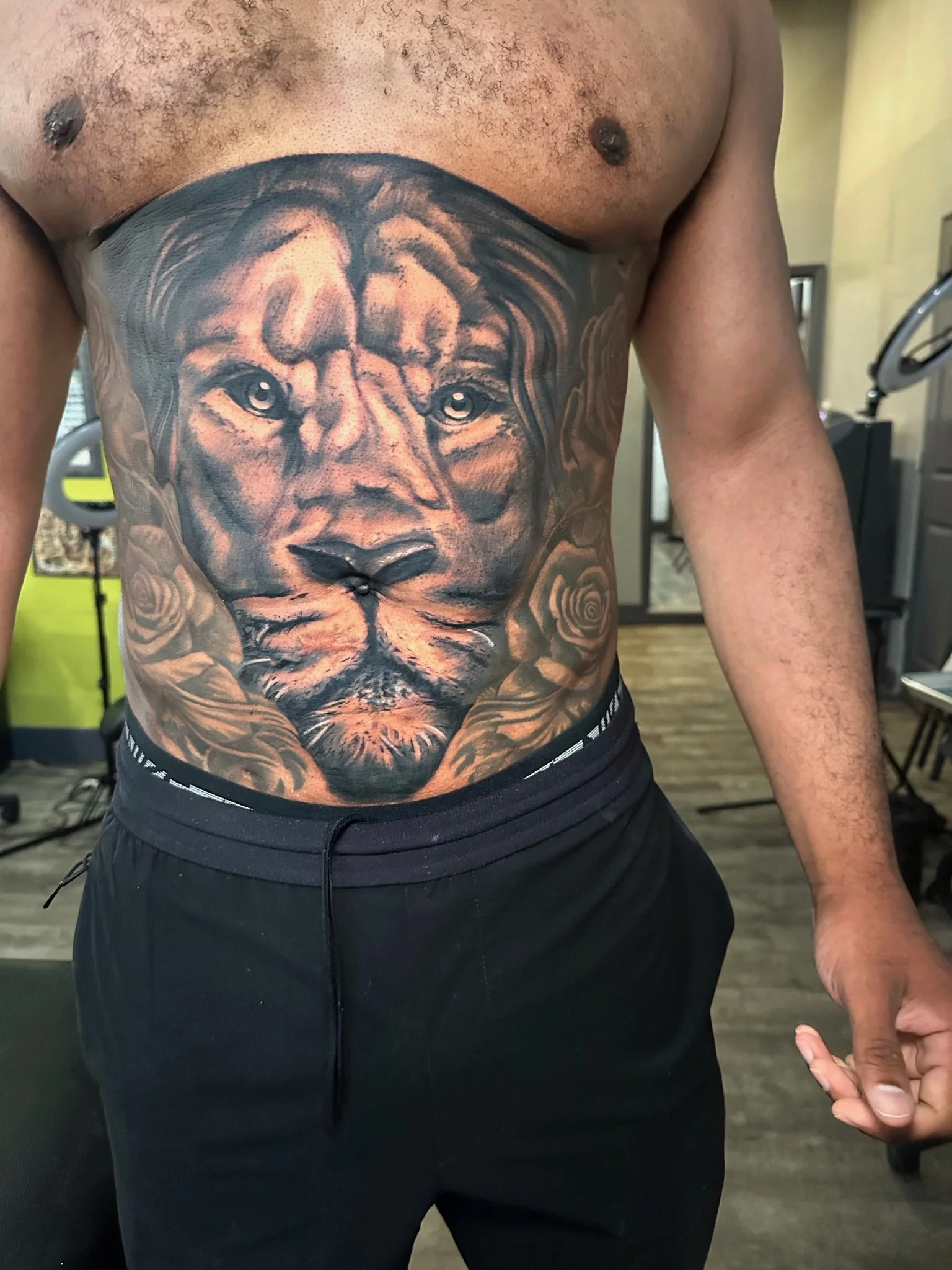
You can have an incredible tattoo concept, a talented artist, and beautiful artwork on paper.
Yet the finished tattoo can still feel wrong.
Why?
Placement.
Choosing where a tattoo goes is sometimes treated as an afterthought. Clients may spend weeks deciding on the artwork and only a few minutes deciding where it should be placed.
That's backwards.
A tattoo is not printed onto a flat surface. It becomes part of a three-dimensional body that moves, bends, stretches, and changes over time.
The same design can look balanced and natural on one area of the body but awkward or compressed somewhere else.
This is one of the most important pieces of tattoo design advice to understand before booking an appointment.
If you're planning a tattoo in Atlanta, here's why placement can make or break an otherwise excellent design.
The Design and the Body Need to Work Together
A tattoo should complement the natural shape of the area where it is placed.
Think about the difference between a flat sheet of paper and a shoulder.
A paper drawing stays still.
A shoulder curves around the body and moves constantly.
The tattoo therefore needs to be designed with that shape in mind.
An experienced tattoo artist in Atlanta considers more than whether the artwork looks good by itself.
They also consider:
Body contours
Muscle structure
Natural movement
Proportions
Skin surface
Existing tattoos
Negative space
Viewing angles
That's why a professional consultation can be so valuable.
Mistake #1: Choosing the Placement After the Design
One common approach is:
Step 1: Find a tattoo online.
Step 2: Decide you love it.
Step 3: Pick a body location afterward.
The problem is that the design may not have been created for your chosen location.
A long vertical tattoo may work beautifully along the forearm but feel compressed across the shoulder.
A wide design may look excellent across the chest but awkward on the wrist.
A circular design may naturally complement one area while fighting the contours of another.
The artwork and placement should be considered together.
Mistake #2: Making a Detailed Tattoo Too Small
This is particularly common with Pinterest and social media inspiration.
A client sees a highly detailed tattoo and wants the same design in a much smaller size.
The problem is that detail needs space.
Fine lines, tiny shapes, lettering, and small areas of negative space can become crowded when compressed.
An artist may recommend increasing the size or simplifying the artwork.
That isn't necessarily changing your vision.
It's protecting the design.
A tattoo should be designed not only for how it looks immediately after the appointment, but also for how it can remain readable as it ages.
Mistake #3: Ignoring Body Movement
Your tattoo moves with you.
Your arm bends.
Your shoulder rotates.
Your stomach expands and contracts.
Your knee flexes.
Your ankle moves.
That movement can affect how a tattoo is perceived.
A skilled artist considers how the artwork sits when the body is:
Relaxed
Flexed
Bent
Standing
Sitting
Moving
This becomes particularly important for larger tattoos and designs placed near joints.
Mistake #4: Forgetting About Proportion
A tattoo that looks appropriately sized in a photograph may be completely different in real life.
Imagine placing a tiny symbol in the middle of a large area such as the thigh.
It might technically work.
But the tattoo could feel visually disconnected from the surrounding space.
Likewise, a very large design placed in a small area can feel cramped.
Good tattoo placement considers the relationship between:
Design size + body area + surrounding negative space
That relationship is what helps a tattoo feel intentional.
Mistake #5: Copying Someone Else's Placement
Reference photos are useful.
But copying another person's placement without considering your own anatomy can lead to disappointment.
A tattoo might look perfect on someone's:
Forearm
Ribcage
Shoulder
Calf
Thigh
But your body isn't identical to theirs.
Even two people of similar height and build can have different proportions.
Use placement photos as inspiration.
Then let your artist determine how the concept can be adapted to your body.
Mistake #6: Ignoring Existing Tattoos
If you're adding to an existing collection, the new tattoo needs to communicate with the tattoos around it.
This is particularly important when building:
Sleeves
Leg pieces
Back pieces
Chest collections
Patchwork tattoos
Curated tattoo arrangements
A new tattoo doesn't exist in isolation.
The artist needs to consider:
Existing artwork
Empty space
Direction
Scale
Style
Visual flow
This is where custom tattoo design becomes particularly valuable.
Negative Space Is Part of the Design
One of the most misunderstood aspects of tattoo composition is negative space.
Negative space is the skin surrounding and within the artwork that isn't filled with ink.
It provides visual breathing room.
Without enough negative space, different elements can begin to compete with each other.
This is especially important when creating larger compositions.
A tattoo doesn't need to cover every available centimetre of skin to look complete.
Sometimes the empty space is what makes the artwork stand out.
Why Your Artist May Recommend a Different Orientation
You might bring a horizontal reference and ask for it vertically.
Or you might bring a vertical design and want it wrapped around your arm.
Your artist may recommend rotating, reshaping, or repositioning the artwork.
Why?
Because the body has direction.
Certain areas naturally favour:
Vertical flow
Horizontal flow
Circular movement
Wrapping compositions
Anatomical symmetry
The artist isn't trying to make the design less attractive.
They're trying to make it work with the body.
Tattoo Placement Can Affect How People See the Design
Consider how you'll normally see your tattoo.
Some placements are primarily visible to you.
Others are mostly visible to other people.
That distinction can influence orientation.
For example, a client may want a piece positioned so that it looks upright to them when they look down.
An artist may have a different recommendation based on how the tattoo will appear to people viewing it externally.
There isn't always one universally correct answer.
It's a matter of discussing what matters most to you.
Placement Matters Even More With Lettering
Lettering can look deceptively simple.
But typography tattoos require careful consideration.
Letters need sufficient spacing.
The size needs to be appropriate.
The orientation needs to make sense.
And the placement needs to account for body movement.
If lettering is too small or tightly packed, readability can become an issue over time.
That's why your artist may recommend changing the font, increasing the size, or simplifying the wording.
Different Body Areas Create Different Challenges
Forearm
The forearm provides a relatively long surface that can work well for vertical designs.
Upper Arm
The natural curve can support larger artwork and wrapping compositions.
Shoulder
The rounded anatomy can influence how circular or flowing designs are positioned.
Ribs
The rib area provides substantial space but involves body movement and a curved surface.
Thigh
The thigh can accommodate larger designs and offers considerable space for custom compositions.
Wrist
The limited area makes simplicity and appropriate sizing particularly important.
Ankle
Movement and available surface area need to be considered carefully.
The best placement depends on the individual rather than a universal rule.
Why a Tattoo Consultation Can Prevent Expensive Mistakes
A consultation is where many placement problems can be solved before they become permanent.
During a consultation, discuss:
Your design
Your preferred placement
Desired size
Future tattoo plans
Existing tattoos
Lifestyle
Visibility preferences
Long-term goals
If you're unsure between two locations, ask your artist to explain the advantages and limitations of each.
A few minutes of professional discussion can save you from making a permanent decision based on a temporary preference.
What About Trending Tattoo Placements?
Social media can make certain placements appear universally suitable.
But trends don't know your anatomy.
A placement may look amazing on ten people online and still be unsuitable for your particular body.
Instead of asking:
"Where is everyone getting this tattoo?"
Ask:
"Where will this design work best on my body?"
That's a much more useful question.
How to Choose the Right Tattoo Placement
Before finalising your tattoo, consider these seven questions:
1. Does the design fit the shape of the area?
2. Is there enough room for the details?
3. Does the tattoo flow naturally with the body?
4. Will the orientation make sense?
5. Does it work with existing tattoos?
6. Does the placement fit your lifestyle?
7. Will you still like the placement years from now?
If you can't answer these confidently, talk to your artist before proceeding.
What Atlanta Clients Should Look for in a Tattoo Artist
If you're searching for a tattoo artist in Atlanta, don't evaluate portfolios solely based on how beautiful individual tattoos look.
Look at composition.
Look at placement.
Look at how the artist works with different body areas.
Look for examples of tattoos from different angles.
Pay attention to whether the artist's work looks intentionally designed for the body rather than simply placed onto it.
A talented tattoo artist isn't just an illustrator.
They're working with anatomy.
A Great Tattoo Should Look Like It Belongs There
This is perhaps the easiest way to understand good placement.
When you look at a well-placed tattoo, the design often feels natural.
It doesn't look like a sticker.
It follows the body's shape.
The size feels appropriate.
The composition has breathing room.
The orientation makes sense.
The artwork and anatomy appear to belong together.
That's the goal.
Not simply a beautiful drawing.
A beautiful drawing adapted to your body.
FAQs
What is the biggest tattoo placement mistake?
One of the biggest mistakes is choosing the placement after deciding on the design without considering anatomy, size, body movement, and proportions.
Does tattoo placement affect how a design looks?
Yes. Body contours, movement, skin surface, and proportions can all influence how a tattoo is perceived.
Should I choose tattoo size before placement?
The two should generally be considered together. The available space can determine whether the original design needs to be enlarged or simplified.
Can a tattoo artist change my design to fit my body?
Yes. A professional artist may adjust the size, orientation, proportions, or details so the design works better with your anatomy.
Is some tattoo placement better for beginners?
There isn't one universally best location. Your artist can help you choose a placement based on the design, your lifestyle, visibility preferences, and anatomy.
Should I copy the placement from a tattoo reference photo?
It's better to use the photo as inspiration. Your body may have different proportions, curves, and available space, so placement should be evaluated individually.
Final Thoughts
A great tattoo design can be ruined by poor placement.
Not because the artwork is bad.
Not because the artist lacks talent.
But because the design and the body were never properly considered together.
Before getting your next tattoo, don't just ask whether you love the artwork.
Ask whether it belongs there.
Think about size, anatomy, movement, negative space, orientation, and your future tattoo plans.
And if you're unsure, talk to a professional.
For clients looking for a tattoo shop in Atlanta, the right artist should be able to explain not only what they can tattoo, but why a particular design may work better in one location than another.
Your body is the canvas.
The best tattoo design is the one that works with it, not against it.
Helpful External Resources
For readers who want to learn more about tattoo safety, skin care, and the tattooing process, these authoritative resources provide additional information: