
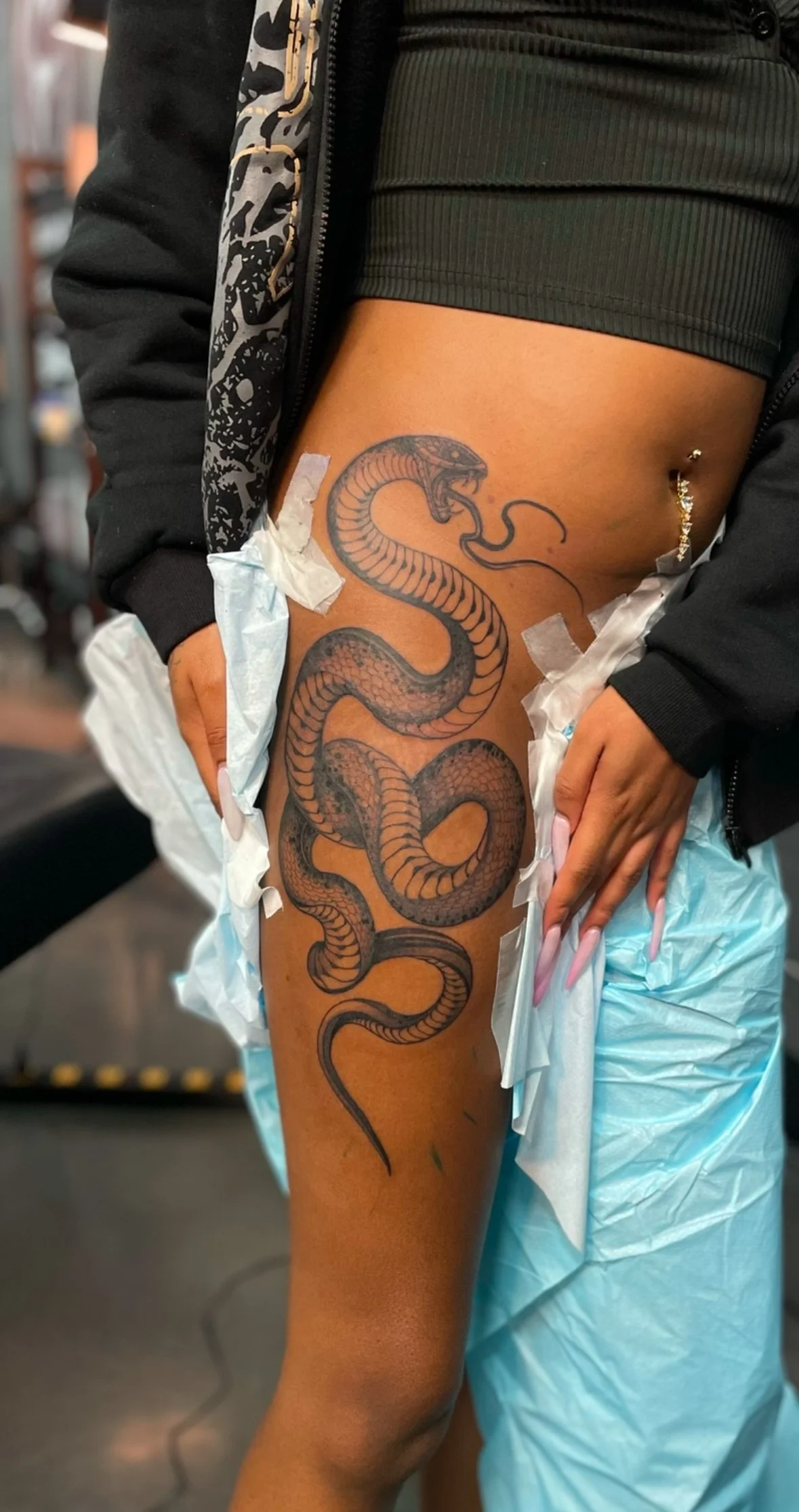
Getting a new tattoo is only the beginning. How you care for your skin during the healing process can affect comfort, help reduce avoidable irritation, and support the appearance of your finished artwork. With shelves full of tattoo balms, specialized lotions, cleansing products, and protective films, however, choosing the right aftercare products can feel more complicated than the tattoo itself.
In 2026, tattoo aftercare products continue to be marketed with claims about faster healing, brighter colors, reduced irritation, and better-looking results. Some products can be useful, but a specialized label does not automatically mean a formula is safer or more effective than a simple alternative.
For anyone getting tattooed in Kennesaw, Georgia, the most useful approach is to look beyond packaging and popularity. Understanding ingredients, following product instructions, and relying on credible skin-care guidance can help you make more informed decisions.
What Has Changed About Tattoo Aftercare in 2026?
One important development is the growing availability of information about tattoo aftercare ingredients and product claims. Consumers can compare ingredient lists, research potential irritants, and find guidance from dermatologists more easily than before.
However, there is no single new product or ingredient that has been established as a universal solution for tattoo healing in 2026. Research on tattoo aftercare remains limited in some areas, and recommendations can differ among tattoo professionals and healthcare providers.
A 2023 study published in Dermatology examined 700 American tattoo aftercare instruction sets and found substantial variation in the recommendations provided. The researchers also identified gaps in hygiene guidance and advice about when to seek medical care. Read the study through PubMed's research summary on tattoo aftercare instructions.
The practical lesson is that a longer aftercare routine is not necessarily a better one. Products should serve a clear purpose, and claims about healing should be evaluated carefully.
Which Ingredients Matter in Tattoo Aftercare Products?
The ingredients in an aftercare product can tell you more than its branding. Before applying a new product to freshly tattooed skin, check the label and consider how its formula fits into your artist's instructions.
1. Fragrance and Essential Oils
Fragrance can make a product smell appealing, but it may also trigger irritation or allergic contact dermatitis in susceptible individuals. Essential oils and botanical extracts can contain fragrance compounds, even when a product is marketed as natural.
A study examining 84 tattoo aftercare products identified fragrance and botanical ingredients among the common potential allergens in the products reviewed. The findings do not mean that every botanical ingredient is harmful. They do show why ingredient lists deserve attention.
For fresh tattoos, a fragrance-free product is generally a sensible choice. Fragrance-free and unscented are not always equivalent terms, so check the ingredient list if you have sensitive skin or known allergies.
A published case report also described a reaction to a scented lotion applied to a healing tattoo, highlighting how an aftercare product itself can contribute to skin problems. You can review the findings in this medical report on scented lotions and tattoo complications.
2. Moisturizing Ingredients
A healing tattoo can feel dry, tight, or itchy as the skin recovers. Appropriate moisturization can help reduce dryness and discomfort, but the aim is to support the skin rather than keep it excessively wet.
Depending on the formulation, moisturizers may contain ingredients such as:
Glycerin: Helps attract and retain water in the outer skin.
Ceramides: Support the skin's natural barrier.
Panthenol: A moisturizing ingredient used in some skin-care products.
Emollients: Help soften the skin and reduce roughness.
These ingredients are not automatically suitable for every person or every stage of healing. The full formula, the condition of the skin, and the product's intended use all matter.
Choose a gentle product that is appropriate for the stage of healing you are in. Apply it as directed and avoid repeatedly adding more whenever the tattoo feels slightly dry.
3. Cleansers and Antibacterial Claims
A clean tattoo is important, but stronger cleansing does not necessarily mean better healing. Harsh soaps, abrasive scrubs, and products that cause burning or excessive dryness can irritate recovering skin.
Look for a gentle cleanser that is suitable for sensitive skin, and follow your tattoo artist's washing instructions. Use clean hands, lukewarm water, and gentle movements rather than scrubbing the area.
Antibacterial marketing deserves particular scrutiny. An ingredient being antibacterial does not establish that it is necessary for routine tattoo aftercare. Strong antiseptics and medicated cleansers should not be added to your routine without an appropriate reason.
If your healthcare professional recommends a specific cleanser or treatment because of a medical concern, follow that advice instead of relying on general product recommendations.
4. Ointments and Petroleum-Based Products
Some aftercare instructions recommend ointments, while others favor lighter moisturizers. The best approach depends on the product, the stage of healing, and the instructions you receive.
A thick layer of ointment can leave skin overly coated, and excessive application may contribute to irritation or interfere with the care routine recommended for your tattoo. Do not assume that applying more products will make your tattoo heal faster.
For routine care, follow your artist's instructions and consider dermatologist guidance. Cleveland Clinic's tattoo aftercare guide discusses gentle cleansing, moisturization, and avoiding products that may interfere with healing.
Once the tattoo has healed, skin-care needs to change. The American Academy of Dermatology recommends water-based lotion or cream when tattooed skin feels dry and sun protection to help preserve the appearance of the tattoo.
Do Tattoo-Specific Products Work Better Than Regular Skincare?
Not automatically. A product labeled specifically for tattoos may be convenient, but the label alone does not prove that it works better than a suitable, fragrance-free moisturizer or gentle cleanser.
Compare products by asking:
Is the product intended for the stage of healing I am in?
Can I review the full ingredient list?
Does it contain fragrance or ingredients I already know irritate my skin?
Are its claims realistic and clearly explained?
Does it fit the instructions provided by my tattoo artist or healthcare professional?
A specialized product may be useful if its formula is appropriate for your skin and it is easy to use correctly. A simpler product may be just as practical if it meets the same needs.
Be cautious of claims that a balm will lock in ink permanently, eliminate all scabbing, prevent every infection, or guarantee faster healing. Tattoo healing depends on more than the product applied to the skin.
What About Second-Skin Bandages and Protective Films?
Adhesive films, sometimes called second-skin dressings, are used by some tattoo professionals to protect a fresh tattoo. They can help shield the area from friction and outside contamination when used correctly.
However, they are not suitable for everyone. Some people develop irritation or an allergic reaction to adhesives, and fluid can collect beneath certain dressings. A film should not be treated as a substitute for hygiene or for monitoring the skin.
If your artist applies a protective dressing, follow the specific manufacturer's instructions and your artist's guidance about how long to leave it in place. Different products have different instructions, so avoid applying one brand's removal schedule to another brand.
Wash your hands before handling the dressing. If it leaks, becomes damaged, or causes significant discomfort, contact your artist for guidance. If you experience a spreading rash, increasing pain, or other concerning symptoms, seek medical advice rather than simply switching to a different product.
Tattoo Aftercare Claims: What Should You Believe?
Marketing language can make it difficult to distinguish a useful product from one that relies on impressive-sounding promises. Use these comparisons as a starting point.
Claim: Natural products are always safer.
Reality: Natural ingredients can still cause irritation or allergic reactions. Evaluate the actual ingredients and your personal sensitivities instead of relying on the word "natural."
Claim: More products mean better healing.
Reality: A complicated routine can introduce more potential irritants and make consistent care harder. A simple routine that follows reliable guidance is often easier to maintain.
Claim: Antibiotic ointment prevents every tattoo infection.
Reality: No over-the-counter product guarantees infection prevention. Do not routinely use topical antibiotics unless a healthcare professional recommends them for your situation.
Claim: A premium tattoo balm guarantees better color retention.
Reality: No balm can guarantee that a tattoo will retain its original appearance. Healing, sun exposure, skin changes, tattoo technique, and long-term care all influence how ink looks over time.
Claim: If a product stings, it must be working.
Reality: Burning or stinging is not proof that a product is effective. Stop using a product that causes a concerning reaction and seek professional guidance if symptoms persist or worsen.
A Practical Tattoo Aftercare Routine
For most people, effective aftercare is about consistency, cleanliness, and avoiding unnecessary irritation.
During the early healing stage
Wash your hands before touching the tattoo.
Follow your artist's instructions for removing or maintaining the initial dressing.
Gently clean the area using the recommended method and a suitable cleanser.
Pat the tattoo dry with a clean, disposable material rather than rubbing it.
Apply an appropriate moisturizer or ointment in the amount recommended for your care routine.
Avoid picking scabs, scratching peeling skin, or soaking the tattoo in pools, hot tubs, or other bodies of water while it heals.
After the tattoo has healed
Continue to care for the skin and protect the tattoo from excessive sun exposure. A broad-spectrum, water-resistant sunscreen with SPF 30 or higher can help reduce ultraviolet-related fading when the skin is fully healed. Do not apply sunscreen to an open or incompletely healed tattoo unless a healthcare professional specifically advises you to do so.
Keep in mind that healing times vary by tattoo size, placement, individual skin characteristics, and other factors. Follow your artist's instructions and ask for clarification if you are unsure when to change your routine.
When Should You Seek Medical Advice?
Some tenderness, mild redness, swelling, and peeling can occur during normal healing. However, worsening symptoms should not be dismissed as an ordinary reaction to tattooing or an aftercare product.
Contact a healthcare professional if you notice increasing redness, worsening pain, significant warmth, pus, a persistent rash, or symptoms that are not improving. Fever, chills, rapidly spreading redness, or severe symptoms warrant prompt medical attention.
If you suspect an allergic reaction to a product, stop using it and seek appropriate advice. Bring the product packaging or ingredient list to your appointment if possible. This can help a clinician identify potential triggers.
Choosing Tattoo Aftercare Products in Kennesaw, GA
If you are planning a tattoo in Kennesaw, make aftercare part of the appointment rather than an afterthought. Ask your tattoo artist what products are appropriate for your specific tattoo, how to use them, and which ingredients or activities to avoid during healing.
Our tattoo services offer a starting point for exploring tattoo styles and planning your next piece. Before your appointment, you can also review our frequently asked questions and contact the studio to discuss practical questions about your visit and aftercare instructions.
The most effective aftercare routine is not necessarily the most expensive or elaborate. It is one that keeps the area clean, supports comfortable healing, minimizes avoidable irritation, and follows appropriate professional guidance.
Frequently Asked Questions
1. What are the best tattoo aftercare products in 2026?
There is no single best product for every tattoo. A gentle cleanser and an appropriate fragrance-free moisturizer or ointment may be sufficient for many people when used according to their artist's instructions. Your skin sensitivities and the stage of healing should guide your choices.
2. Should I use fragrance-free lotion on a new tattoo?
Fragrance-free products can help reduce exposure to a common source of skin irritation. Choose a product appropriate for healing skin and follow your artist's instructions. Stop using it if you develop a concerning reaction.
3. Are natural tattoo aftercare products safer?
Not necessarily. Plant extracts and essential oils can cause allergic reactions, and a natural label does not guarantee that a product is gentle. Review the ingredients and consider any known skin sensitivities.
4. Can I use petroleum jelly on a new tattoo?
Recommendations vary with the product and care method. Heavy application may be unsuitable for some healing routines. Follow your artist's specific guidance, avoid applying thick layers without direction, and consult a healthcare professional if you have concerns about the skin's condition.
5. When can I start using sunscreen on my tattoo?
Wait until the tattoo has fully healed before applying sunscreen directly to the tattooed area. During healing, protect it by following your artist's instructions and avoiding direct sun exposure. Once healed, broad-spectrum sunscreen with SPF 30 or higher can help limit fading.
Disclaimer
This article is for general educational purposes and is not a substitute for medical advice, diagnosis, or treatment. Product suitability varies by person and healing stage. Follow your tattoo artist's aftercare instructions and consult a qualified healthcare professional about suspected infection, allergic reactions, or other skin concerns.