
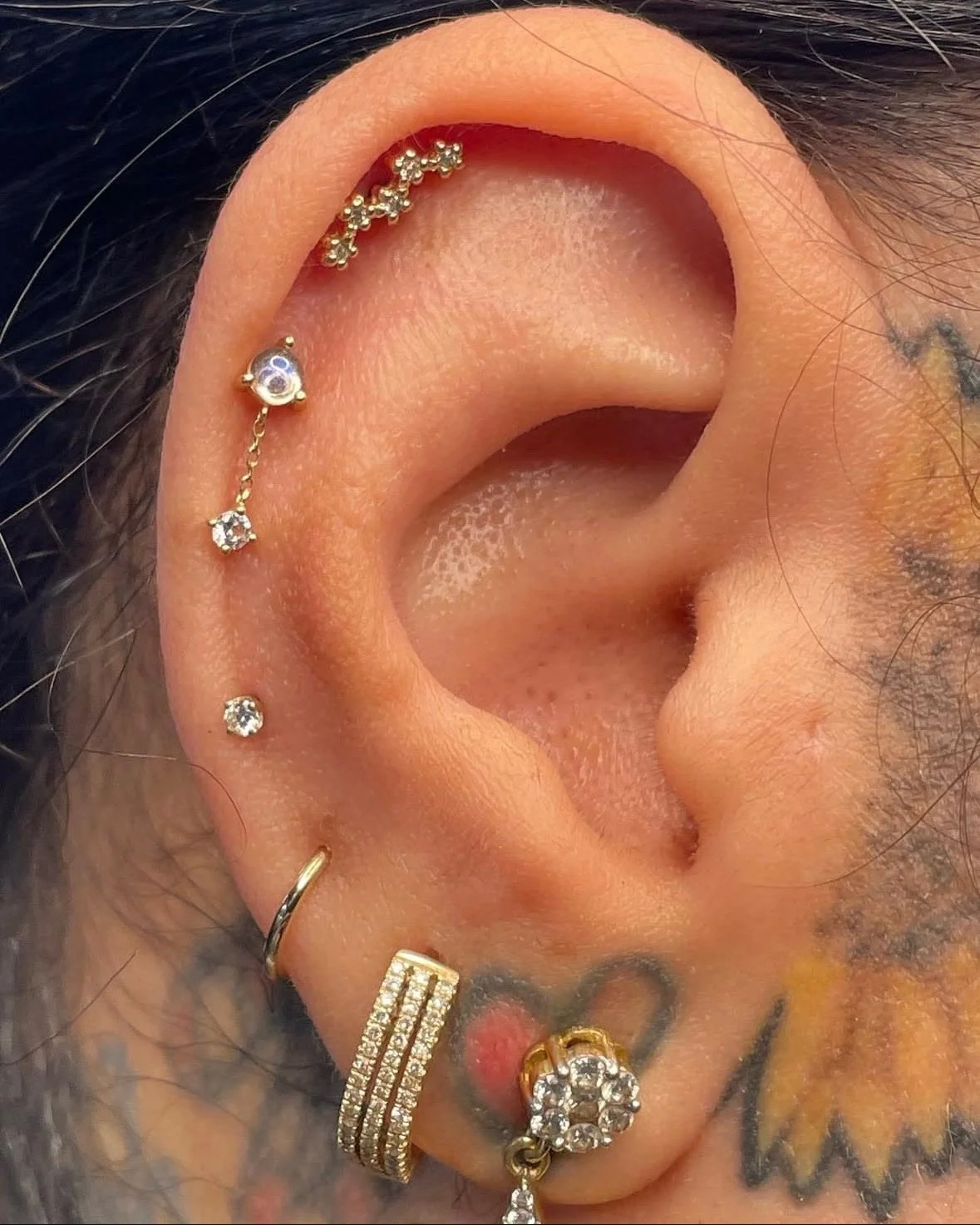
Cartilage piercings are a popular way to personalize an ear, from a simple helix stud to a carefully arranged collection of conch, tragus, and flat piercings. Their appearance may be subtle or bold, but the healing process requires patience.
One of the most common questions people ask before getting pierced is how long recovery will take. A cartilage piercing may look settled after a few weeks, yet the tissue underneath can still be healing. Changing jewelry too early, sleeping on the piercing, or repeatedly touching it can lead to irritation and prolong recovery.
For anyone considering a cartilage piercing in Atlanta, understanding the difference between early healing and complete healing helps set realistic expectations.
Medical guidance and professional piercing experience agree on an important point: cartilage piercings generally heal more slowly than earlobe piercings. The exact timeline varies by placement, jewelry, aftercare, and individual healing response.
How Long Does a Cartilage Piercing Take to Heal?
Most ear cartilage piercings take approximately 6 to 12 months to heal fully, although individual cases can take longer. Some healthcare resources report shorter ranges for certain ear piercings, but the Association of Professional Piercers recommends allowing adequate time for cartilage tissue to heal and emphasizes that healing times vary.
The difference comes down to several factors, including the piercing's location, the amount of irritation it experiences, and the person's individual healing response.
A piercing can feel comfortable on the outside long before the internal channel has finished healing. This is why a lack of pain does not automatically mean the jewelry can be changed safely.
According to Cleveland Clinic's guidance on ear piercing and healing, cartilage has a more limited blood supply than the soft tissue of the earlobe. That contributes to its slower healing process.
For Atlanta clients planning a new piercing, it is helpful to think in terms of months rather than weeks. Your piercer can explain the expected timeline for your specific placement and help you monitor progress.
Why Cartilage Heals More Slowly Than Earlobes
The earlobe is made primarily of soft tissue, while much of the upper and inner ear is supported by cartilage. These tissues differ in structure and blood supply, which affects how they respond to injury.
When a piercing is performed, the body begins repairing the tissue around the jewelry. The area may initially experience tenderness, swelling, mild bleeding, or localized redness. These effects should gradually settle, although occasional irritation can occur during the healing period.
Cartilage has less direct blood supply than the earlobe, which helps explain why cartilage piercings often require a longer recovery.
The jewelry also remains in contact with the healing channel. Pressure, friction, accidental bumps, and repeated movement can interfere with the body's repair process.
This is particularly relevant for piercings around the helix, conch, tragus, and flat of the ear. These areas can come into contact with pillows, headphones, eyeglasses, hair, and clothing.
The goal is not simply to keep the piercing clean. It is also to protect the healing tissue from unnecessary irritation.
Do Different Cartilage Piercings Heal at Different Speeds?
Yes. Although many cartilage piercings have similar general healing expectations, their placement and daily exposure to pressure can affect recovery.
Helix Piercing
A helix piercing sits along the outer upper rim of the ear. It may be exposed to friction from hair, hats, headphones, and sleeping positions.
Avoid sleeping directly on the pierced ear, and be careful when brushing or styling your hair. Even small repeated movements can irritate a healing helix piercing.
Conch Piercing
A conch piercing passes through the cartilage in the central bowl-shaped area of the ear. Depending on the jewelry and anatomy, it may come into contact with earbuds, headphones, or other accessories.
Keep devices clean and avoid pressure on the piercing. Do not force earbuds or headphones into a position that presses against the jewelry.
Tragus Piercing
The tragus is the small section of cartilage in front of the ear canal. Because of its location, it can be disturbed by earbuds, hands, and frequent contact when using a phone.
Choose accessories that do not press against the area, and avoid touching the jewelry unnecessarily.
Flat and Other Cartilage Piercings
Flat piercings are placed through the flatter cartilage area of the upper ear. Other placements, such as rook and daith piercings, have their own anatomical considerations.
The right jewelry style, fit, and placement depend on your ear anatomy. A professional assessment before piercing can help determine which options are appropriate.
Explore the available professional piercing services at Southern Ink, Atlanta to learn more about piercing options and consultation considerations.
What Happens During the Cartilage Piercing Healing Process?
Healing does not happen in a perfectly straight line. A piercing may feel comfortable for several days and then become tender after pressure or accidental contact.
The following stages offer a general guide, not a guaranteed schedule.
The First Few Days
Mild swelling, tenderness, localized redness, and occasional light bleeding can occur soon after the procedure.
The area may feel sensitive when touched, and some clear or pale fluid may dry into a small amount of crust around the jewelry.
During this period, avoid unnecessary contact and follow the aftercare instructions provided by your piercer.
The First Several Weeks
Initial soreness and swelling should generally improve, but the piercing remains vulnerable to irritation.
Bumps can sometimes develop after repeated pressure, friction, or other irritation. A bump is not automatically an infection, and its cause cannot always be determined by appearance alone.
Continue gentle cleaning, avoid sleeping on the piercing, and resist the temptation to rotate or move the jewelry.
Several Months Into Healing
The piercing may look normal and feel comfortable, but the internal tissue can still be fragile.
This is often when people become tempted to change jewelry or reduce their aftercare routine. Resist making those changes based only on appearance.
A piercing that seems healed externally may not be fully healed internally. Continue caring for it until healing is complete, and consult a qualified piercer before changing jewelry.
Full Healing
A fully healed cartilage piercing should no longer show persistent tenderness, swelling, crusting, or other signs of ongoing irritation. However, symptoms alone cannot establish with certainty that the tissue is completely healed.
A qualified piercer can assess the piercing and advise on jewelry changes or downsizing. If you have signs of infection, seek medical advice rather than relying on a routine piercing check.
5 Factors That Can Delay Cartilage Piercing Recovery
Even with careful aftercare, healing times vary. These factors can contribute to irritation or a longer recovery.
1. Sleeping on the Piercing
Pressure from a pillow can irritate cartilage and may affect the angle of the jewelry over time.
Try sleeping on the opposite side. A clean travel pillow with an opening for the ear can also help reduce direct pressure.
2. Touching or Rotating the Jewelry
Moving the jewelry repeatedly can disturb healing tissue and introduce contaminants from your hands.
Wash your hands before necessary contact, and otherwise leave the piercing alone.
3. Poorly Fitting or Unsuitable Jewelry
Jewelry that is too tight may not leave enough room for swelling. Jewelry that is too long or poorly fitted may catch on objects and move excessively.
Material quality matters too. A qualified piercer can help select appropriate initial jewelry, such as suitable implant-grade titanium, based on the piercing and your needs.
Do not attempt to change a tight, embedded, or painful piece of jewelry yourself.
4. Harsh Cleaning Products
Alcohol, hydrogen peroxide, and other harsh products can irritate healing tissue. Over-cleaning may also interfere with recovery.
The Association of Professional Piercers' aftercare guidance recommends sterile saline wound wash and advises against twisting jewelry or using harsh cleaning products.
Follow your piercer's instructions and avoid adding multiple cleaning products in an attempt to speed up healing.
5. Repeated Friction and Everyday Habits
Hair products, makeup, dirty headphones, eyeglasses, hats, and clothing can all irritate a new piercing.
Be mindful when changing clothes, brushing your hair, exercising, and using accessories near the ear. Clean items that regularly contact the area, and avoid activities that repeatedly bump or press against the jewelry.
How to Care for a Healing Cartilage Piercing
Consistent, gentle care is more useful than trying to force the healing process to move faster.
Follow these general practices:
Wash your hands before touching the piercing.
Clean it gently with sterile saline wound wash intended for wound care, following your piercer's instructions.
Rinse away residue as directed and dry gently with a clean disposable product.
Do not twist, rotate, or repeatedly move the jewelry.
Avoid sleeping directly on the pierced ear.
Keep hair products, cosmetics, and other irritants away from the area.
Avoid changing the jewelry before it is fully healed unless a qualified professional determines that a change is necessary.
Attend a professional check if the jewelry feels too tight, catches repeatedly, or causes ongoing irritation.
For more guidance about appointments, piercing preparation, and aftercare expectations, visit the Southern Ink, Atlanta FAQ page.
Do not use homemade salt mixtures that may be too concentrated, and avoid applying ointments or antibacterial products unless a healthcare professional recommends them for a specific reason.
When Is a Cartilage Piercing Fully Healed?
A cartilage piercing may be ready for a jewelry change when the healing process is complete, not simply when the initial tenderness disappears.
Before changing jewelry, look for the absence of ongoing swelling, pain, redness, discharge, and crusting. These are useful signs, but they do not guarantee that the internal channel has finished healing.
Because cartilage piercings can take 6 to 12 months or longer, it is important to be patient and seek advice from a qualified piercer before changing the original jewelry.
Some piercings require a professional jewelry downsize during healing. This is different from changing jewelry for appearance. A downsize may be appropriate once swelling has settled, but timing and jewelry fit should be assessed by a professional.
If you suspect an infection, do not remove the jewelry on your own without medical guidance. Contact a healthcare professional for advice, particularly if swelling is increasing or the jewelry appears to be embedding in the tissue.
When Should You Seek Medical Attention?
Some mild tenderness and localized swelling can be part of normal early healing. However, cartilage infections can become serious and should not be ignored.
Seek prompt medical attention if you notice:
Increasing pain, redness, warmth, or swelling
Thick or unusual discharge, particularly if accompanied by worsening symptoms
Redness spreading beyond the immediate piercing site
Fever, chills, or feeling unwell
Significant swelling that makes the jewelry feel tight or embedded
An infection involving ear cartilage may require medical treatment. Do not attempt to treat a suspected infection using alcohol, peroxide, leftover antibiotics, or other home remedies.
If symptoms are severe or progressing quickly, seek urgent care. Medical professionals can assess the area and determine the appropriate treatment.
Planning a Cartilage Piercing in Atlanta
Before getting a cartilage piercing, consider your preferred placement, daily habits, and ability to protect the area while it heals.
If you regularly wear headphones, sleep on one side, or use accessories that press against your ears, discuss those habits during your consultation. A professional piercer can help you understand how placement and jewelry selection may affect your experience.
Southern Ink Atlanta offers professional body piercing services at its studio at 5296 Riverdale Road, Atlanta, GA 30349. You can review the piercing service options and ask questions about suitable placements, jewelry, and aftercare before your appointment.
A good piercing experience starts with realistic expectations. Planning for several months of healing, choosing suitable jewelry, and following consistent aftercare can help you avoid preventable irritation and give the tissue time to recover.
Final Thoughts
Cartilage piercings can be a distinctive addition to your personal style, but they require patience and consistent care. Unlike earlobe piercings, they often take 6 to 12 months or longer to heal fully because cartilage has a more limited blood supply.
Recovery depends on placement, jewelry fit, daily pressure, hygiene, and individual healing response. A piercing that looks normal may still be healing internally, so avoid changing jewelry too soon.
For anyone considering a cartilage piercing in Atlanta, the best approach is to choose a professional studio, follow clear aftercare instructions, protect the piercing from friction, and seek medical attention when symptoms suggest a complication.
Giving your piercing enough time to heal is an important part of achieving a comfortable, lasting result.
Frequently Asked Questions
1. How long does a cartilage piercing take to heal completely?
Many cartilage piercings take approximately 6 to 12 months to heal fully, although some take longer. The timeline depends on placement, jewelry, aftercare, and individual healing response.
2. Why does my cartilage piercing still hurt after several weeks?
Mild tenderness can occur during healing, particularly after pressure or accidental contact. However, worsening pain, increasing redness, warmth, swelling, or unusual discharge may indicate a complication and should be assessed by a healthcare professional.
3. Can I sleep on my cartilage piercing?
It is best to avoid sleeping directly on a healing cartilage piercing. Pressure can cause irritation and may affect the jewelry's position. Sleeping on the opposite side or using a clean travel pillow with an ear opening can help.
4. When can I change my cartilage piercing jewelry?
Wait until the piercing is fully healed before changing jewelry for appearance. Since cartilage piercings may take 6 to 12 months or longer, consult a qualified piercer before making a change. A professional may recommend an earlier downsize if the initial jewelry is too long after swelling settles.
5. How do I know if my cartilage piercing is infected?
Worsening pain, warmth, redness, swelling, unusual discharge, or spreading redness may indicate infection. Fever or rapidly worsening symptoms require prompt medical attention. Do not attempt to diagnose or treat a suspected cartilage infection at home.
Disclaimer
This article provides general educational information and does not replace medical advice, diagnosis, or treatment. Healing times vary from person to person. If you suspect an infection or experience significant or worsening symptoms, seek care from a qualified healthcare professional.