
What Tattoo Clients Should Know About AI-Generated Tattoo Designs
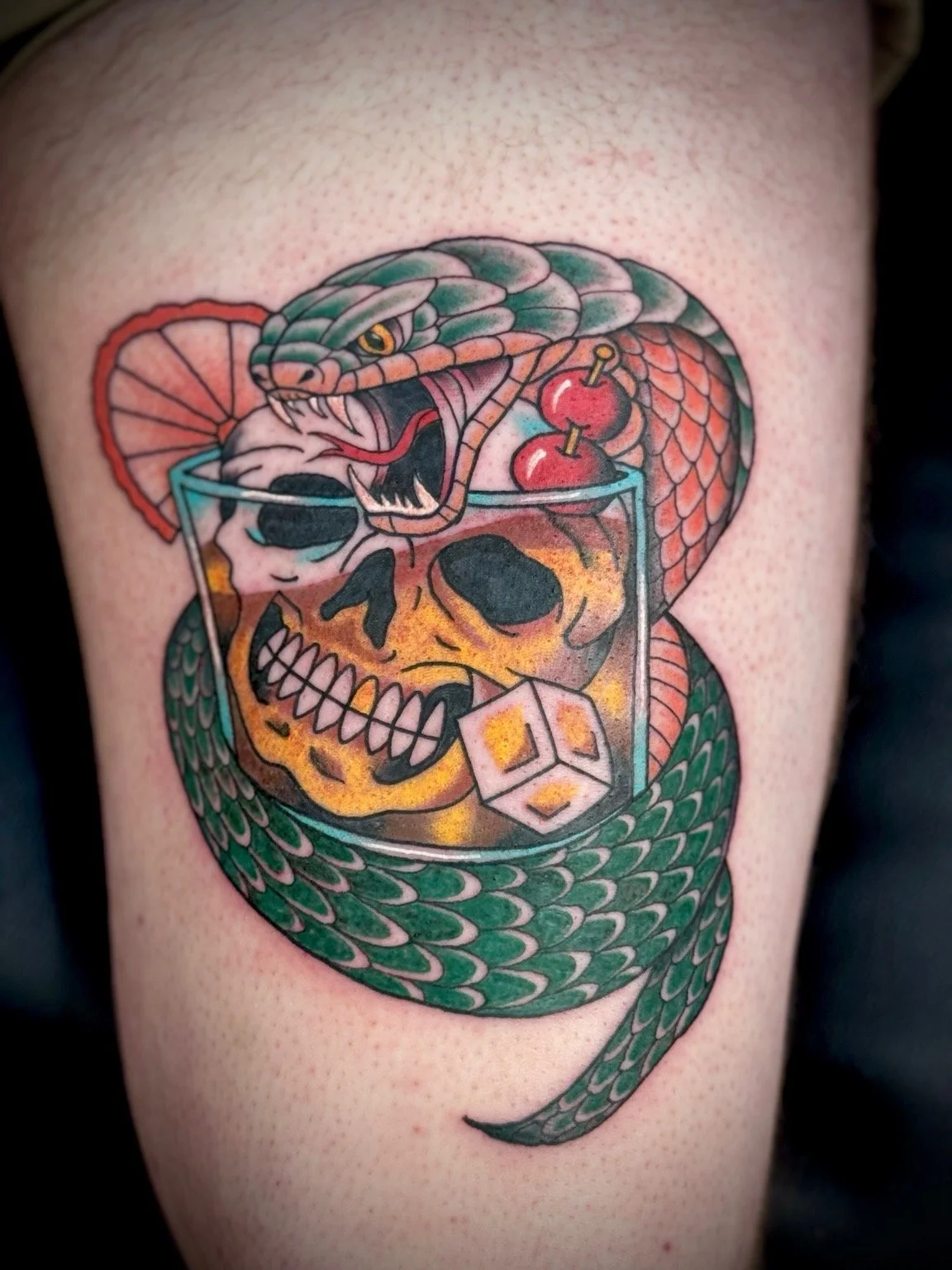
Artificial intelligence has made it easier to turn an idea into a detailed tattoo image. With a few prompts, someone can generate a realistic portrait, a floral sleeve, a surreal creature, or a combination of symbols that would have been difficult to describe using words alone.
For people planning a tattoo in Atlanta, these tools can be useful during the early stages of the design process. An AI-generated image can help communicate a mood, explore different compositions, or bring several creative ideas together.
However, an image that looks impressive on a screen is not automatically ready to become a tattoo.
Tattooing requires more than an attractive picture. The design must work with the body's contours, suit the intended placement, use appropriate detail, and remain readable as the skin changes over time. Originality and artistic interpretation also matter.
Understanding the difference between an AI-generated reference and a finished tattoo design can help Atlanta clients prepare for consultations and work more effectively with their artists.
What Is an AI-Generated Tattoo Design?
An AI-generated tattoo design is an image created with artificial intelligence tools based on written prompts, reference images, or other inputs. A user might describe a black-and-grey wolf surrounded by roses, a fine-line botanical composition, or a surreal portrait with geometric elements.
The software produces an image that approximates those instructions. The result may look polished and highly detailed, but it is primarily a visual concept rather than a technical plan for tattooing.
For example, someone looking for a tattoo inspired by Atlanta's music culture might generate an image combining musical notes, a microphone, and personal symbols. That image could help communicate the overall idea, but a tattoo artist would still need to determine how the elements should be arranged, sized, and translated into workable linework and shading.
AI can help people express ideas they struggle to explain. The important distinction is that generating a picture is different from designing a tattoo that works on real skin.
1. AI Images Can Help Communicate Your Ideas
One of the most practical uses of AI in tattoo planning is visual exploration.
Not everyone can draw, and describing a complex idea can be challenging. You might know that you want a tattoo to feel dark, delicate, dramatic, or symbolic without knowing the exact composition or artistic terminology.
AI tools can help you explore possibilities before meeting with an artist.
They may help you compare:
Different arrangements of flowers, animals, or other subjects
Light and dark compositions
Black-and-grey concepts versus colour ideas
Minimalist imagery versus intricate artwork
Different moods, poses, or background elements
Possible combinations of personal symbols
For example, if you want a floral tattoo that represents family, you could generate a few concepts showing different flower arrangements. These images can help you identify the shapes, balance, and overall mood that appeal to you.
When visiting a tattoo studio in Atlanta, bring the image as a reference and explain what you like about it. You might prefer the arrangement of the flowers but want fewer details, stronger outlines, or a different central element.
That explanation gives your artist a clearer starting point than simply requesting an exact copy.
2. An AI Reference Is Not a Finished Tattoo Design
A major misunderstanding occurs when clients assume that an AI-generated image can be transferred directly onto their skin without modification.
In most cases, the image needs artistic review and adaptation.
AI generators create images for display on a screen. They do not consistently account for the practical requirements of tattooing, including needlework, line spacing, pigment placement, skin movement, and long-term readability.
A generated image may contain:
Extremely fine lines packed closely together
Tiny decorative elements that are difficult to reproduce clearly
Shading transitions that need to be translated into tattoo techniques
Overlapping shapes that make the main subject hard to distinguish
Inconsistent anatomy or unrealistic proportions
Small details that disappear when the design is reduced to the intended size
These issues may be difficult for an inexperienced viewer to notice. A professional tattoo artist can identify which parts need to be simplified, corrected, or redrawn.
This is one reason custom tattooing involves more than tracing a picture. The artist must turn a visual idea into artwork that can be applied effectively to a particular body area.
For a closer look at the planning process, read our guide to custom versus flash tattoos in Atlanta.
3. Body Placement and Anatomy Can Change the Design
An AI image may look balanced when viewed as a rectangle on a phone, but the human body is not a flat surface.
The shoulder curves, the forearm changes shape around the wrist and elbow, and the ribs move as a person breathes. Larger tattoos must also account for how the composition flows across different areas of the body.
A design intended for the upper arm may need a different arrangement when adapted for the calf, chest, thigh, or back.
Consider a generated image of a snake winding around a flower. On a screen, the composition may appear symmetrical and compact. When placed on an arm, the artist may need to lengthen the snake's body, reposition the flower, or adjust the direction of the design so it follows the natural contours.
The same principle applies to portraits and realistic imagery. Proportions, focal points, and shading need to work at the actual tattoo size and placement.
When discussing your idea with Atlanta tattoo artists at Southern Ink, Atlanta, be open to recommendations about sizing and positioning. An adjustment may improve the overall appearance and help the tattoo read more clearly from different angles.
4. Too Much Detail Can Affect Tattoo Longevity
AI-generated images often contain intricate textures, tiny decorative marks, dramatic highlights, and tightly packed details. These features can make a digital image look impressive, but they may not translate well into a small or densely detailed tattoo.
Tattoo ink does not remain as sharply separated as pixels on a screen. Over time, the appearance of a tattoo can change, and fine details may become less distinct.
The amount of detail a design can support depends on several factors, including:
The tattoo's overall size
The spacing between lines
The contrast between light and dark areas
The complexity of the subject
The placement on the body
The artist's technique and the client's skin
For example, an AI-generated portrait might include individual strands of hair, tiny highlights, and numerous background details. At a small size, those elements may compete with the facial features rather than improve them.
An artist may simplify the background, strengthen selected lines, or create more space between important elements. These changes are not necessarily compromises. They can make the finished tattoo clearer and more visually balanced.
Before committing to an AI concept, ask your artist how the design should be adjusted to suit its size and help it remain readable over time.
5. Originality Matters More Than a Perfect AI Image
AI-generated designs raise important questions about originality.
A generated image can combine familiar visual elements into something that appears new, but it may also resemble existing tattoos, illustrations, photographs, or the recognizable work of a particular artist.
This is especially relevant when a client wants a design based closely on an image found online.
There is a difference between using a reference for inspiration and asking a tattoo artist to reproduce another artist's work. An exact copy may disregard the original creator's effort and leave the client with a tattoo that lacks personal distinction.
A better approach is to identify the qualities that appeal to you.
Perhaps you like the bold contrast, the way a subject is framed, the use of negative space, or the combination of realistic and ornamental elements. Those characteristics can guide a new composition without copying the original image.
AI-generated references can be handled the same way. Use them to communicate your concept, then work with your artist to develop an interpretation that reflects your preferences and their artistic judgment.
This collaborative approach can produce a tattoo that feels more personal than a direct reproduction.
6. What Should You Tell Your Tattoo Artist About an AI Reference?
You do not need to arrive at your consultation with a perfect design. You do need to explain what you want the tattoo to represent and which parts of the reference matter most to you.
Before your appointment, consider the following questions:
What is the main subject? Identify the person, animal, object, symbol, or idea that should remain central to the design.
What do you like about the image? Explain the composition, mood, shading, colours, or specific details that caught your attention.
Where do you want the tattoo? Tell your artist the intended body area and your approximate size preference, even if you are open to suggestions.
What can be changed? Decide which elements are essential and which can be simplified, removed, or rearranged.
Are there other references? Bring photographs, sketches, or examples of artistic techniques that help explain your preferences. Avoid overwhelming the consultation with dozens of unrelated images.
For example, you could say, "I like the overall shape and dark shading in this AI image, but I want the central figure to be more realistic and the background to be simpler."
That gives your artist room to interpret the idea while preserving what matters to you.
7. Understand That Artists May Adapt or Decline a Design
Not every tattoo artist will approach AI-generated references in the same way. Some may welcome them as concept-development tools, while others may prefer sketches, photographs, or a discussion without AI-generated artwork.
Even an artist who accepts AI references may recommend significant changes before proceeding.
The design could require a different size, a revised composition, more realistic proportions, or fewer decorative elements. In some cases, the requested concept may not be practical for the intended placement.
Respectful communication helps prevent misunderstandings. Ask questions when an artist recommends a change, and give them an opportunity to explain the technical reason behind it.
If the artist suggests a different approach, consider how it may improve the final result. The purpose of a consultation is not simply to approve an existing image. It is to determine how the concept can become a successful tattoo.
If you are still exploring styles, reviewing the portfolios of Southern Ink, Atlanta's tattoo artists can help you identify artists whose experience aligns with your intended design.
8. How AI and Human Creativity Can Work Together
AI does not have to be the enemy of creativity. Used thoughtfully, it can be one part of the planning process.
A client may use it to explore different concepts, combine broad visual ideas, or communicate a feeling that is difficult to describe. The tattoo artist can then apply professional judgment to composition, anatomy, linework, contrast, and placement.
The strongest process keeps the client involved while allowing the artist to make necessary design decisions.
Think of the AI image as a starting point, not a set of instructions that cannot be changed. The goal is not to preserve every generated detail. It is to create a tattoo that communicates your idea and works well on your body.
For people considering custom tattoo work in Atlanta, this distinction can make the consultation more productive and help establish realistic expectations before the appointment.
Final Thoughts
AI-generated tattoo designs offer a convenient way to explore ideas, but the image on your screen is only the beginning.
Before getting inked, consider whether the design is anatomically practical, appropriate for your chosen placement, clear at the intended size, and original enough to reflect your personal vision. Be prepared for your artist to redraw or simplify parts of the concept.
A successful tattoo depends on thoughtful planning, technical skill, and collaboration. AI can help you communicate what you imagine, but a professional tattoo artist brings the experience needed to adapt that idea into artwork designed for real skin.
If you are planning a tattoo in Atlanta, bring your references, explain what matters to you, and approach the design process as a conversation. The result should be more than an impressive digital image. It should be a tattoo you feel confident wearing for years.
Frequently Asked Questions
Can I bring an AI-generated tattoo design to a tattoo artist in Atlanta?
Yes. You can bring an AI-generated image as a reference, but ask the artist to review it rather than expecting an exact copy. The image may need adjustments for placement, size, linework, and long-term readability.
Can a tattoo artist copy an AI-generated design exactly?
Some elements may be usable, but direct reproduction is not always practical or appropriate. An artist may need to correct errors, simplify details, or create an original interpretation. They may also decline designs that closely copy another artist's work.
Why do AI tattoo designs sometimes look unrealistic?
AI-generated images can contain inconsistent anatomy, overlapping shapes, excessive detail, or visual effects that are difficult to reproduce with tattooing techniques. A trained artist can identify these problems and adapt the design.
Will an AI-generated tattoo look the same on my skin as it does on a screen?
Not necessarily. Body contours, tattoo size, skin characteristics, technique, and the way ink changes over time can affect the final appearance. Your artist may adjust the composition and detail to make it work better for the intended placement.
Is it better to use AI or let a tattoo artist create the design?
They can serve different purposes. AI can help you explore concepts and communicate preferences, while a tattoo artist can create or adapt the artwork using professional knowledge of tattooing, anatomy, placement, and longevity. The best approach is the one that supports clear communication and a well-planned final design.
Disclaimer
This article is for general educational purposes and does not replace an individual tattoo consultation. Final design decisions should be made with a qualified tattoo artist who can evaluate the concept, intended placement, size, and practical requirements.