
The Complete Tattoo Healing Timeline Week by Week: What to Expect From Day 1 to Fully Healed
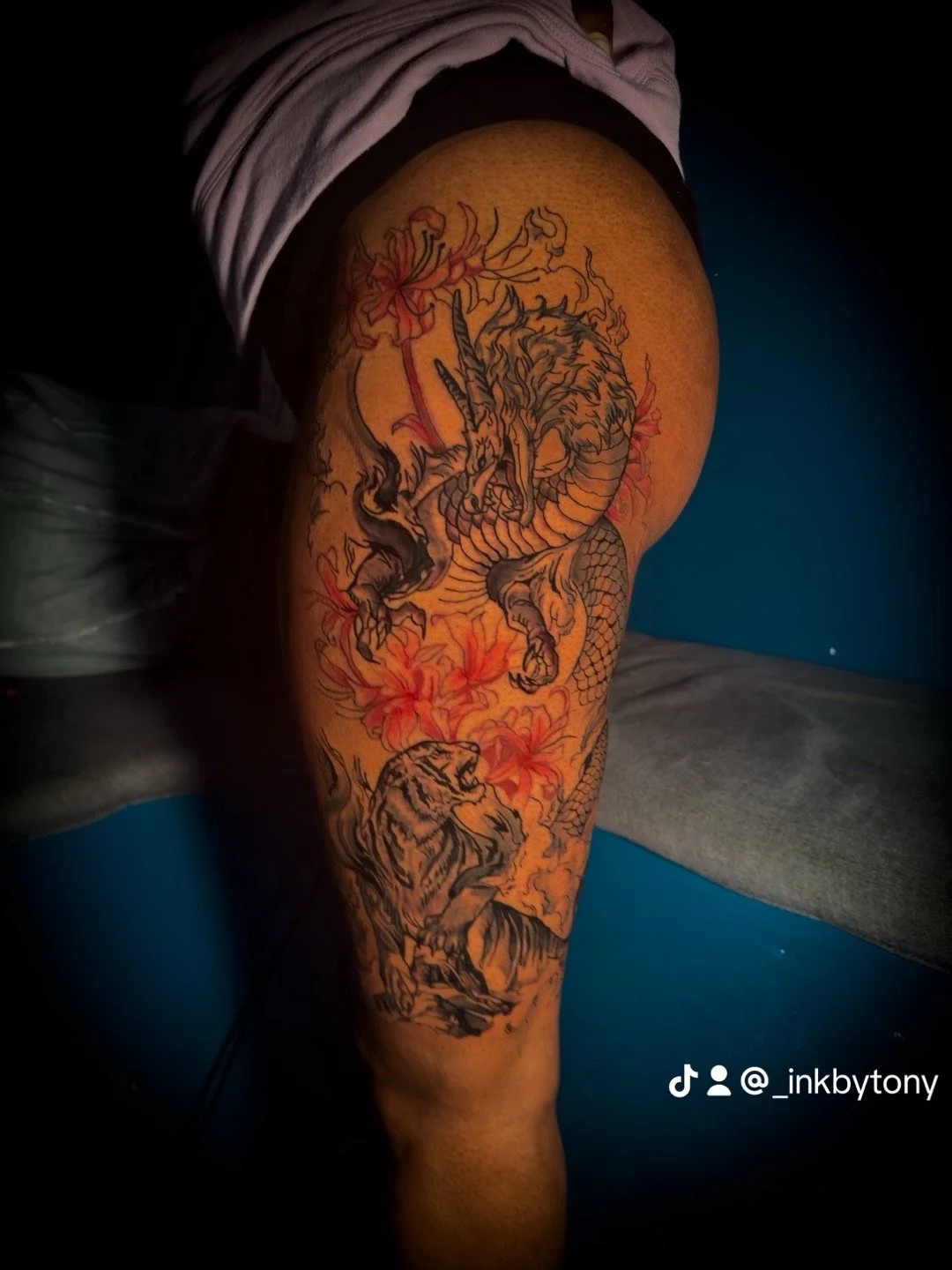
Getting a new tattoo is only half the journey.
Once you leave the tattoo studio, your body begins an incredible biological process that transforms thousands of tiny needle punctures into a healed work of art. While your tattoo may look complete on the surface after a few weeks, the deeper layers of your skin continue repairing themselves long afterward.
One of the biggest mistakes first-time clients make is assuming a tattoo is healed simply because it no longer feels sore.
In reality, tattoo healing happens in stages, and each stage requires a slightly different approach to aftercare.
Whether you've just visited a tattoo artist in Atlanta or you're preparing for your first appointment, understanding the healing timeline can help you avoid common mistakes and protect your investment for years to come.
How Long Does a Tattoo Take to Heal?
Most tattoos appear healed on the surface within 2 to 4 weeks, but complete healing beneath the skin often takes 2 to 3 months, depending on:
✔ Tattoo size
✔ Placement
✔ Your immune system
✔ Skin type
✔ Aftercare routine
✔ Lifestyle habits
Every person's healing timeline is slightly different, but knowing what to expect each week can make the process much less stressful.
Why Tattoos Need Time to Heal
A tattoo is created by depositing pigment into the dermis, the layer beneath your outer skin.
Your body immediately begins repairing the controlled injury by:
Stopping minor bleeding
Reducing inflammation
Producing collagen
Forming new skin cells
Stabilizing tattoo pigment
Our article Ink Particle Science: What Happens Under the Skin After a Tattoo Session explains why ink remains visible even after your skin heals.
Day 1: The Fresh Tattoo Stage
Your tattoo is essentially a fresh wound.
It's completely normal to notice:
Mild redness
Swelling
Warmth
Tenderness
Small amounts of clear plasma mixed with ink
Some tattoos may also be covered with a protective bandage or medical-grade adhesive dressing.
What You Should Do
✔ Follow your artist's instructions for removing the covering.
✔ Wash your hands before touching the tattoo.
✔ Gently clean the area.
✔ Apply only recommended aftercare products.
What to Avoid
Touching unnecessarily
Tight clothing
Direct sunlight
Intense workouts
Week 1: Inflammation Begins to Calm
During the first week, your tattoo often feels:
Tight
Slightly sore
Sensitive
Some light peeling may begin toward the end of the week.
Many people worry when colors appear slightly dull.
This is completely normal because a thin layer of healing skin temporarily covers the tattoo.
What's Happening Under the Skin?
While you notice visible healing on the surface, your immune system is working beneath it.
Specialized immune cells called macrophages surround and stabilize tattoo pigment while helping repair damaged tissue.
This is one reason tattoos remain visible for decades.
Week 2: Peeling and Itching
This is often the stage that surprises first-time clients.
You may notice:
Flaking
Dry skin
Mild itching
Peeling similar to sunburn
These are signs that your skin is replacing damaged outer layers.
Resist the Urge to Scratch
Scratching can:
Remove healing skin prematurely
Increase irritation
Introduce bacteria
Affect healing
Our article What Happens If You Scratch a Healing Tattoo? explains why patience is so important during this stage.
Week 3: The Tattoo Starts Looking Normal Again
By now, much of the peeling has finished.
Many tattoos appear:
Brighter
Clearer
Less irritated
Although the surface looks healthy, deeper tissues are still healing.
This is often when people mistakenly stop following aftercare routines.
Consistency remains important.
Week 4: Surface Healing Is Mostly Complete
For many people, the outer skin has largely recovered by the fourth week.
You can usually expect:
Minimal sensitivity
Little or no peeling
Reduced redness
Improved comfort
However, avoid assuming your tattoo is fully healed simply because it looks good.
Deep healing continues well beyond this point.
Months 2 and 3: Deep Skin Recovery
The deeper layers of your skin continue:
Producing collagen
Reorganizing tissue
Stabilizing pigment
Strengthening the tattooed area
By the end of this stage, most tattoos have completed the majority of the healing process.
The American Academy of Dermatology notes that skin repair continues beneath the surface even after visible healing has occurred.
Healing Looks Different Depending on Placement
Not every tattoo heals at the same speed.
Areas with more movement may require extra patience.
Hands
Frequent washing and daily use increase wear during healing.
Feet
Shoes and walking create additional friction.
Ribs
Breathing constantly stretches the skin.
Joints
Elbows and knees experience continuous movement.
Shoulders
Backpacks and fitted clothing may increase irritation.
Placement often influences comfort more than the tattoo itself.
Lifestyle Habits That Affect Healing
Several everyday habits can influence recovery.
Sleep
Quality sleep supports tissue repair.
Hydration
Healthy skin heals more efficiently when adequately hydrated.
Nutrition
Protein, vitamins, and minerals help support normal tissue repair.
Sun Exposure
Fresh tattoos should be protected from excessive UV exposure.
The Skin Cancer Foundation recommends protecting healing skin from ultraviolet radiation.
Signs Your Tattoo Is Healing Normally
Healthy healing often includes:
✔ Mild peeling
✔ Light itching
✔ Temporary dull appearance
✔ Gradual improvement each week
These changes are usually expected during recovery.
Warning Signs That Need Attention
While mild irritation is normal, contact your tattoo artist or healthcare provider if you notice:
Increasing redness after several days
Significant swelling
Thick yellow or green discharge
Severe pain
Fever
Red streaks spreading away from the tattoo
Prompt evaluation helps address potential complications early.
Common Healing Myths
"My tattoo is healed after one week."
False.
The surface may improve quickly, but deeper healing continues for much longer.
"Peeling means something went wrong."
False.
Light peeling is a normal part of skin renewal.
"More ointment speeds healing."
Not necessarily.
Applying excessive products may trap moisture and interfere with healing.
Follow your artist's recommendations.
Tips for a Smooth Recovery
Before your tattoo has fully healed:
✔ Wear loose clothing.
✔ Stay hydrated.
✔ Avoid scratching.
✔ Protect the tattoo from excessive sun.
✔ Wash your hands before touching it.
✔ Follow your artist's aftercare instructions consistently.
Small habits repeated every day usually produce the best results.
Healing Is Different for Every Person
Age, health, skin type, placement, and lifestyle all influence recovery.
Instead of comparing your tattoo to someone else's, focus on gradual improvement.
If you're unsure whether something is normal, contact your tattoo artist.
Professional tattoo artists would much rather answer a question than have a client accidentally damage a healing tattoo.
FAQs
How long does a tattoo take to heal completely?
Most tattoos appear healed after 2 to 4 weeks, but complete healing beneath the skin often takes 2 to 3 months.
Is itching a sign my tattoo is healing?
Yes. Mild itching commonly occurs during the peeling stage and is usually a normal part of recovery.
Why does my tattoo look dull after a week?
A thin layer of healing skin temporarily covers the tattoo. As healing progresses, the colours become clearer again.
When can I start exercising after getting a tattoo?
Light activity may be appropriate sooner, but strenuous exercise should be limited during the early healing period. Follow your tattoo artist's advice based on the tattoo's size and placement.
When can I swim after getting a tattoo?
Wait until the tattoo has fully healed before swimming in pools, lakes, rivers, or the ocean.
Final Thoughts
Healing is just as important as the tattoo itself.
Every stage, from the first day of redness to the final months of deep skin repair, contributes to the long-term appearance of your artwork.
By understanding the healing timeline, following professional aftercare advice, and giving your body the time it needs, you'll help preserve crisp lines, vibrant colour, and healthy skin for years to come.
If you're planning your next appointment with a professional tattoo artist in Atlanta, don't hesitate to ask questions about healing before you leave the studio. A little preparation today can make a lasting difference tomorrow.